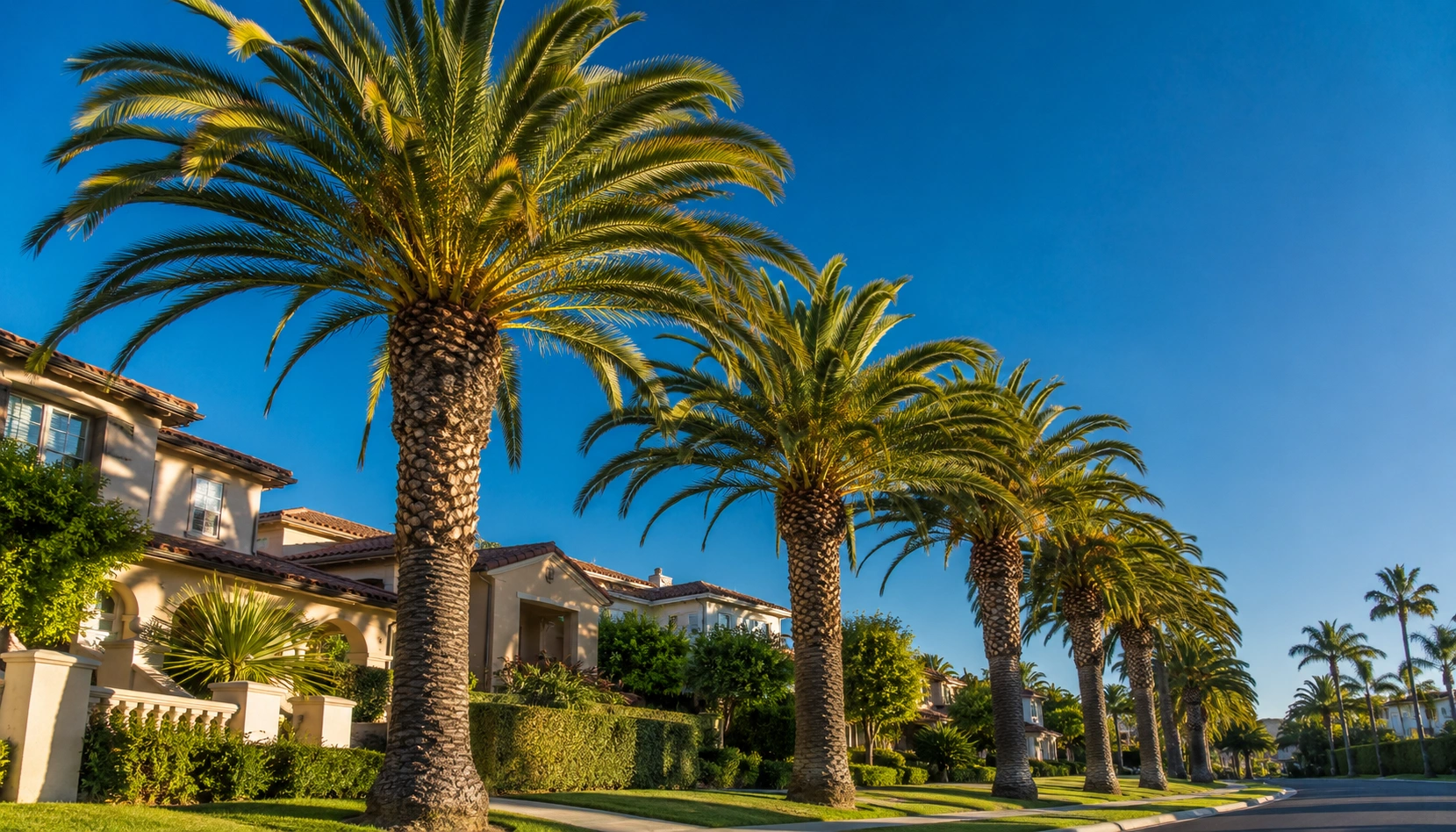
Palm weevils are one of the most destructive pest threats affecting palm trees across Southern California — and most infestations are well established by the time any visible damage appears. If your palms have been recently pruned, show signs of stress, or are located in a neighborhood with known South American palm weevil activity, timing your response is everything. This guide covers the full life cycle, the palm species most at risk across SD, OC, and Riverside, and the treatment windows that separate a saved tree from a lost one.
Why timing is the deciding factor in palm weevil control
Palm weevils are stealth pests. Nearly all of their destructive activity happens inside the palm, in the crown and trunk tissue, long before a homeowner notices anything unusual. By the time fronds begin wilting, the crown starts leaning, or you see adult weevils on the exterior of the trunk, the infestation is often irreversible.
This is what makes palm weevil control fundamentally different from most pest problems: it cannot be reactive. A reactive treatment applied after visible symptoms appear is frequently too late to save the tree. Effective control is built around understanding where the pest is in its life cycle and acting during the windows when treatment can actually intercept it.
Across Southern California — where warm temperatures allow weevil populations to remain active for more months than almost anywhere else in the country — that window is shorter than most people realize.
The SoCal difference
In regions with cold winters, palm weevil populations slow significantly during the off-season. In San Diego, Orange County, and Riverside’s warmer inland valleys, populations can remain active year-round at low levels, then spike aggressively in spring and early summer. There is no true safe season here — only high-risk and lower-risk windows.
Which palm species are most at risk in SoCal
Not every palm in your neighborhood faces the same level of threat. The South American palm weevil — the most aggressively destructive species now established in California — shows strong preferences for certain species, and those species dominate the streetscapes and residential landscapes of San Diego, Orange County, and Riverside County.
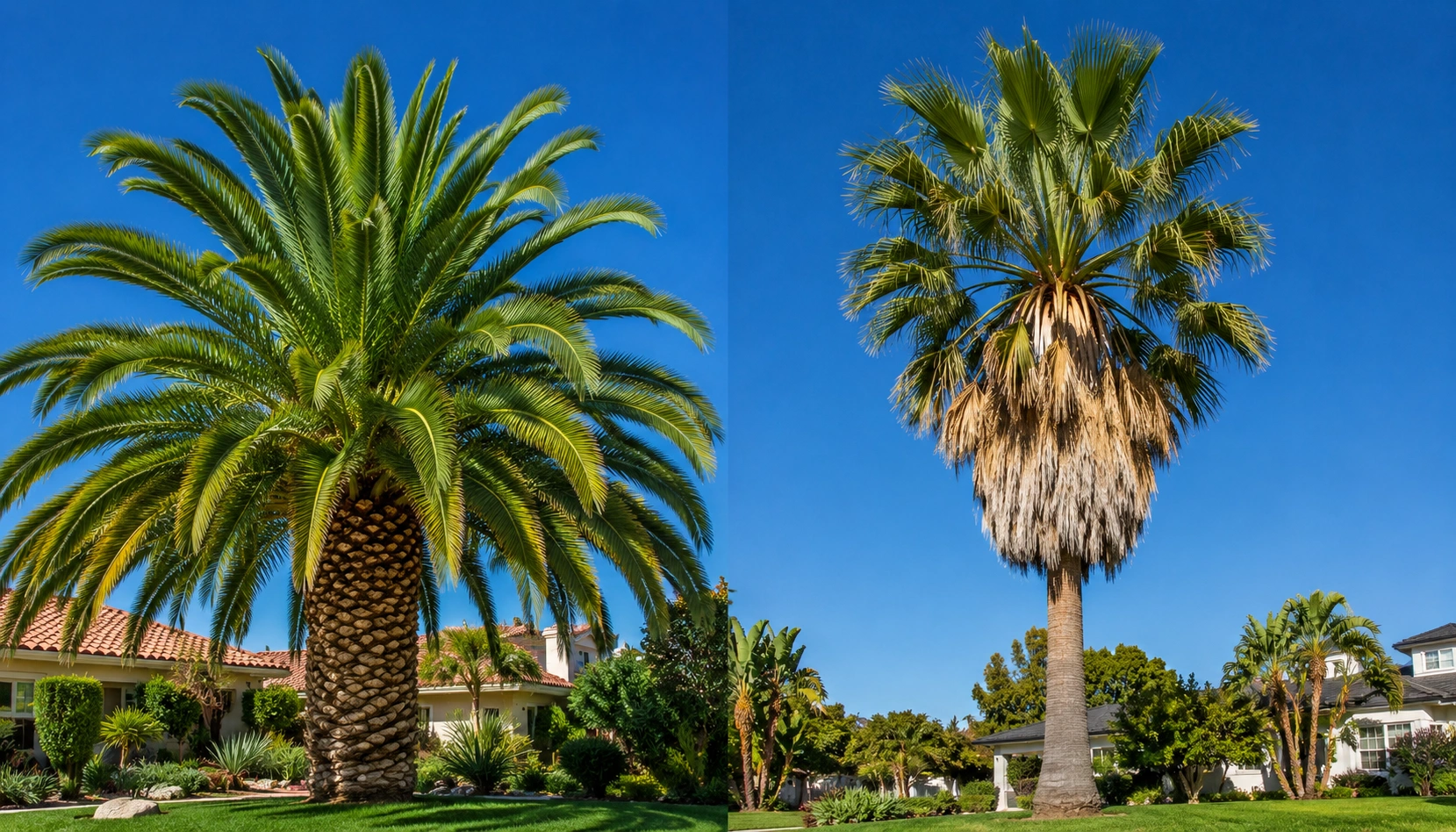
Canary Island Date Palm
Phoenix canariensis. The most heavily targeted species in SoCal. Extremely common in SD and OC streetscapes and residential landscapes.
Highest risk
Canary Island date palms and Mexican fan palms — the two most commonly targeted species across SoCal’s residential and commercial landscapes.
Mexican Fan Palm
Washingtonia robusta. Widely planted across all three counties. Frequently used as street trees in OC and Riverside urban corridors.
High risk
California Fan Palm
Washingtonia filifera. Native to the Coachella Valley and Riverside County. Common in drier inland landscapes including Palm Springs and Temecula.
High risk
Queen Palm
Syagrus romanzoffiana. Popular residential and commercial ornamental throughout coastal SD and OC. Frequently stressed by poor soil conditions, increasing vulnerability.
Moderate risk
Date Palm
Phoenix dactylifera. Common in Riverside County’s desert-adjacent communities. Also targeted by the red palm weevil where populations are established.
Moderate–high risk
King Palm
Archontophoenix cunninghamiana. Popular in shaded, moist landscape settings in coastal areas. Lower risk than fan palms but not immune.
Lower risk
AG Pest note: Stressed palms — those that have been improperly pruned, are under-irrigated, or have suffered storm or freeze damage — are significantly more attractive to egg-laying females than healthy trees. Palm health management and treatment timing work together. One without the other reduces effectiveness.
The palm weevil life cycle, stage by stage
Palm weevils — including the South American palm weevil (Rhynchophorus palmarum) and palmetto weevil (Rhynchophorus cruentatus) — complete four life stages. The risk level and treatment options change significantly at each stage.
1
Egg
Laid in pruning wounds, trunk cracks, or stressed tissue. Hatch within days. Preventive treatment targets this window.
2
Larva (Grub)
The destructive phase. Grubs tunnel through crown and trunk tissue for weeks to months. Hardest stage to treat.
3
Pupa
Larvae form fiber cocoons inside the palm. Feeding slows but adults are preparing to emerge and spread.
4
Adult
Strong fliers. Lay hundreds of eggs. First visible sign for most homeowners — but damage is usually severe by now.
The larval stage is where palms are lost
Palm weevil grubs are responsible for nearly all fatal damage. They destroy the vascular tissue that moves water and nutrients through the tree, and they compromise the structural crown. Once grubs have been active for an extended period, the palm cannot recover — even if treated. This is why professional programs focus on prevention and early intervention, not reactive response after symptoms appear.
Adults are the window everyone misses
Adult weevils are attracted to freshly pruned palms and stressed trees by chemical cues. The window between a pruning cut and adult egg-laying can be extremely short — sometimes days. In SoCal’s warm climate, leaving a recently pruned palm unprotected during peak season is one of the most common ways infestations begin in residential landscapes.
What infestation looks like: before and after
Understanding what to look for — and what healthy palms look like — is the first step toward early detection. Most homeowners only see the “after” picture because they didn’t know what to watch for at the beginning.
Before — healthy palm
- ✓ Fronds growing upright and uniform in color
- ✓ Crown is full and symmetrical
- ✓ No soft or discolored tissue at the crown base
- ✓ Trunk is firm with no oozing sap
- ✓ No adult weevil activity visible on exterior
- ✓ Pruning wounds are clean and healing
After — infestation present
- ✗ Newest fronds wilting or failing to open
- ✗ Crown collapse or “pencil pointing” at the top
- ✗ Soft, mushy tissue at crown base when pressed
- ✗ Dark oozing sap or fermented odor from trunk
- ✗ Adult weevils visible at wound sites
- ✗ Fibrous material (cocoons) inside pruning cavities
Critical timing note
The transition from “before” to “after” is faster than most homeowners expect. A palm can appear healthy and show full crown collapse within 4–8 weeks once a significant larval population is active inside. If you are seeing any of the warning signs above, contact a licensed professional immediately — do not wait to see if the tree recovers on its own.
SoCal treatment timing calendar
Treatment timing for palm weevil control in Southern California is driven by adult flight activity, pruning schedules, and temperature-dependent larval development rates. The calendar below reflects typical seasonal risk patterns for San Diego, Orange County, and Riverside County. Inland Riverside communities (Palm Springs, Indio, Temecula) tend to see earlier spring activity and longer fall activity due to warmer baseline temperatures.
| Month |
Adult Activity |
Treatment Priority |
Pruning Risk |
| January |
Low |
Preventive |
Low |
| February |
Low–Moderate |
Preventive |
Moderate |
| March |
Increasing |
⚑ Treat Now |
High |
| April |
Peak |
⚑ Treat Now |
Very High |
| May |
Peak |
⚑ Treat Now |
Very High |
| June |
Peak |
⚑ Treat Now |
Very High |
| July |
High |
⚑ Treat Now |
High |
| August |
High |
⚑ Treat Now |
High |
| September |
Moderate–High |
Active monitoring |
Moderate |
| October |
Moderate |
Preventive |
Moderate |
| November |
Low–Moderate |
Monitor |
Low |
| December |
Low |
Preventive |
Low |
Inland Riverside County communities experience peak season approximately 2–3 weeks earlier in spring and 2–3 weeks later in fall compared to coastal San Diego. If you are in Palm Springs, Indio, or the Coachella Valley, treat the April–June window as your highest priority.
San Diego, Orange County & Riverside: how location affects risk
Palm weevil activity and risk levels vary across Southern California based on climate patterns, the density of host palms, and how established weevil populations are in a given area. AG Pest serves all three counties and sees distinct patterns in each.
San Diego County
Coastal & Inland Communities
One of the most heavily affected regions in California. The South American palm weevil is well established here. High-risk areas include Chula Vista, La Mesa, El Cajon, Escondido, and National City where Canary Island date palms are widely planted. Coastal communities see extended adult flight seasons due to mild temperatures. Inland areas like Santee and Lakeside tend to see more aggressive spring spikes.
Orange County
Coastal & Urban Corridors
OC’s dense urban palm corridors along Pacific Coast Highway, in Anaheim, Santa Ana, Irvine, and Laguna Beach face increasing pressure as weevil populations spread northward. Mexican fan palms used as street trees in commercial zones are particularly vulnerable. The urban heat island effect in inland OC cities accelerates weevil development and extends peak activity into late fall.
AG Pest serves all of Orange County with the same timing-based treatment programs used in San Diego.
Riverside County
Desert Edge & Inland Communities
Riverside County’s warmer temperatures — particularly in Palm Springs, Rancho Mirage, Temecula, and Murrieta — create some of the most aggressive weevil development conditions in the region. California fan palms, which are native to this area, face the same vulnerability as transplanted species. Date palms in agricultural and residential settings around the Coachella Valley are also at elevated risk.
Riverside County service is available through AG Pest’s same SoCal-wide treatment program.
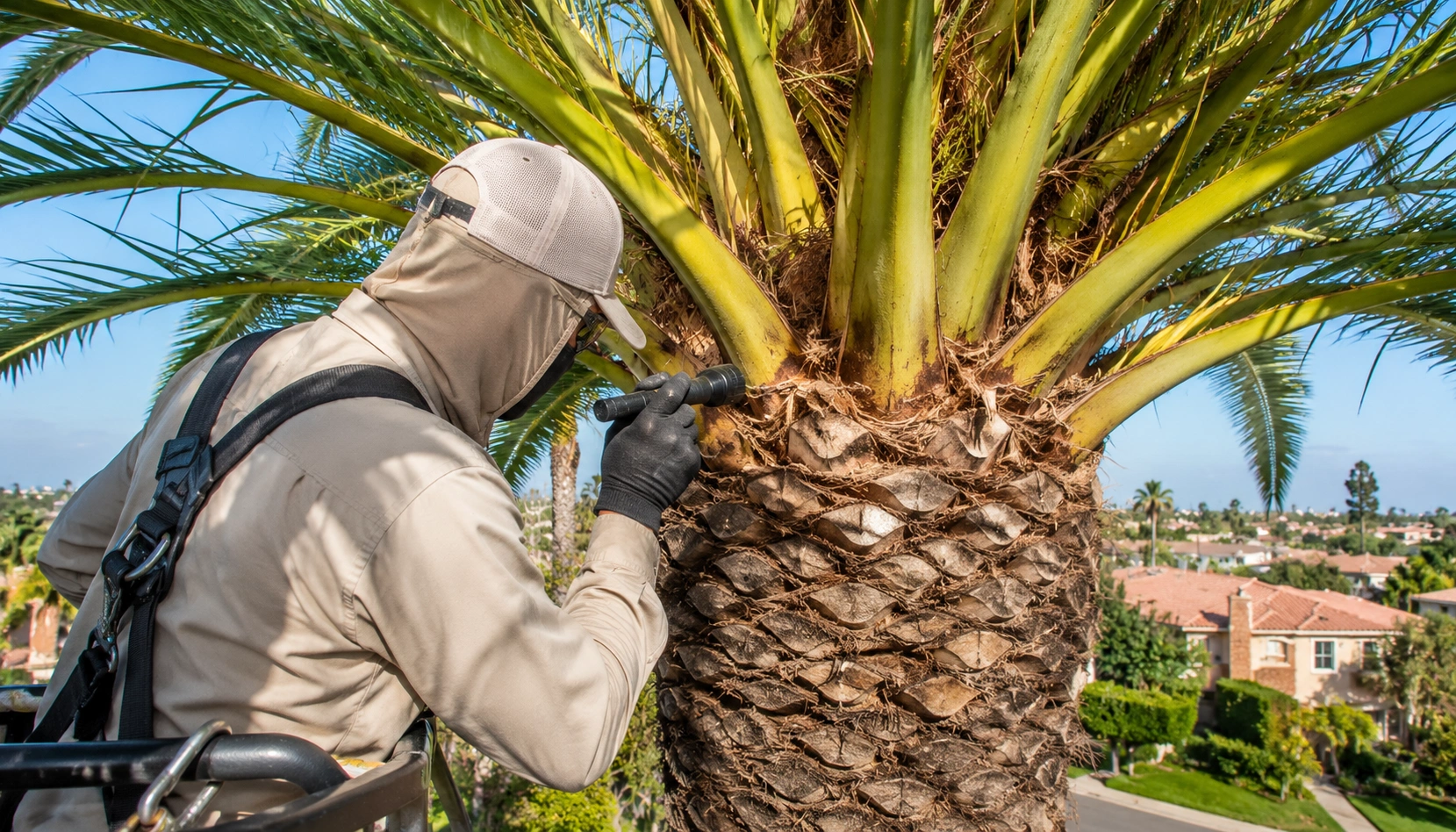
Early crown inspection and preventive trunk treatment during the March–September window are the most effective tools in professional palm weevil management.
How professional palm weevil control works
Professional palm weevil treatment is built around the life cycle windows identified above. It is not a single application — it is a program that combines preventive and active treatment based on seasonal timing.
-
1
Trunk & crown preventive treatments. Applied before or immediately after pruning, preventive treatments create a protective window that stops adult females from successfully egg-laying in vulnerable tissue. Timing matters: treatment applied more than a few days after a pruning wound has been exposed during peak season is less effective.
-
2
Systemic treatments for high-value palms. For Canary Island date palms or other high-value specimens, systemic programs move active ingredients through the vascular tissue of the tree, creating long-term protection that covers both the larval feeding zones and adult contact points.
-
3
Monitoring & inspection programs. Catching infestations at the egg or early larval stage — rather than after grubs have been feeding for weeks — requires regular inspections during peak season. Professional programs include scheduled monitoring visits during the March–September high-risk window.
-
4
Pruning schedule coordination. Improper pruning timing is one of the top risk factors in SoCal. Professional programs include recommendations on when to prune (cooler months, early morning, outside peak flight windows) and how to manage wound protection immediately after cuts.
-
5
Species-specific treatment adjustments. The South American palm weevil is more aggressive and fast-moving than the palmetto weevil. Treatment frequency and product selection may differ based on the species present in your area, which varies across San Diego, OC, and Riverside zip codes.
External authority: The University of California’s Statewide IPM Program and
CDFA pest management guidance both confirm that preventive chemical treatment — applied in coordination with pruning — is the most effective strategy currently available for South American palm weevil management in California landscapes.
What is the South American palm weevil and why is it so dangerous in California?
⌄
The South American palm weevil (Rhynchophorus palmarum) is an invasive species first detected in San Diego County in 2011 and now well established across Southern California. Unlike the palmetto weevil, which primarily targets stressed or declining trees, the South American palm weevil will attack otherwise healthy palms — particularly Canary Island date palms, which are one of the most commonly planted ornamental palms in SoCal. A single female can lay hundreds of eggs, and the larvae feed aggressively inside the crown and trunk, often killing the tree before external symptoms are obvious. It is currently considered one of the most significant palm pest threats in California.
Can a palm tree recover from a palm weevil infestation?
⌄
It depends entirely on how early the infestation is caught. Palms detected at the egg or very early larval stage — before significant feeding damage to the crown’s growing point — can sometimes be saved with aggressive professional treatment. Palms showing visible symptoms such as wilting new fronds, crown collapse, or soft crown tissue have almost always sustained damage beyond recovery. This is why professional inspection during peak season is so important: a palm that looks fine from the curb may already have an active larval population inside. The earlier the intervention, the better the odds.
When is the best time to treat palm trees for weevils in San Diego, OC, and Riverside?
⌄
Preventive treatment is most effective when applied before adult weevil flight activity peaks — typically in late February or March in coastal San Diego and OC, and as early as late January or February in warmer inland Riverside areas like Palm Springs or Temecula. Treatment should also be applied immediately after any pruning during the active season (March through September), since fresh pruning wounds are primary egg-laying sites. For palms already under monitoring, a second treatment application in late summer (August–September) helps cover the secondary activity window. In short: don’t wait until you see a problem — treat before peak season hits.
Is palm weevil treatment safe for the tree and surrounding landscape?
⌄
Yes. Professional palm weevil treatments use EPA-registered products applied by licensed technicians at labeled rates targeted specifically to the palm. Systemic treatments that move through the tree’s vascular tissue are designed to minimize off-target contact with surrounding plants, soil, or groundwater when applied correctly. Your technician will advise on any specific re-entry or irrigation recommendations after treatment. California-licensed pest control operators are required to follow CDFA and DPR guidelines, which include applicator training, proper product selection, and documentation of each application.
Does pruning my palm trees increase the risk of palm weevil infestation?
⌄
Yes — significantly. Pruning during peak adult flight season (March through September) exposes fresh wound tissue that is highly attractive to egg-laying females. Adult palm weevils detect these wounds through chemical cues and can arrive within hours. If pruning during the active season is unavoidable, wound protection treatment should be applied as part of the same service visit. Ideally, structural pruning of high-value palms — particularly Canary Island date palms — should be scheduled for the cooler, lower-activity months of November through February. Over-pruning (removing too many fronds at once, cutting into the green frond petioles) also stresses the tree and increases overall vulnerability.
How do I know if the palm weevil problem in my neighborhood is getting worse?
⌄
A few indicators: if you’ve seen neighbor palms dying or being removed over the past 1–2 seasons, that’s a strong signal that adult populations are active in your immediate area and spreading. Adult South American palm weevils are strong fliers and can move several miles to find new palms. You can also check CDFA’s ongoing monitoring reports for your county — the agency tracks confirmed population locations and quarantine zones. In San Diego County, several communities in the South Bay and East County have had elevated activity for several years. Orange County and Riverside County are seeing expanding activity. A professional inspection from a technician familiar with your specific community is the most reliable way to assess your current risk level.
What does professional palm weevil control cost in Southern California?
⌄
Treatment costs vary based on the number of palms, species, height, and the type of program (single preventive treatment vs. seasonal monitoring program). A professional inspection is the right starting point — it establishes the actual risk level and lets your technician recommend the appropriate treatment approach for your specific palms and location. AG Pest offers free assessments for San Diego, Orange County, and Riverside County properties. Preventive treatment for a single palm typically costs significantly less than emergency response to an active infestation or palm removal after a tree is lost — making early investment the better value in almost every case.