
Summer Pest Control in Southern California: Your June–August Pest Calendar
When the heat settles in across Southern California, the pests don’t slow down — they move in. From Argentine ants streaming toward your kitchen sink to wasps building nests under the eaves, summer is the busiest pest season of the year in San Diego, Orange County, and Riverside. Here’s exactly what to expect month by month, why it happens, and what actually keeps these pests out.

What pests are most active in summer in Southern California?
The short answer: ants, wasps and yellowjackets, rodents, spiders, and — for anyone with palms — the South American palm weevil. Warm temperatures speed up insect life cycles, dry conditions push pests indoors in search of water, and longer days give colonies more time to forage and grow. Here’s the month-by-month picture.
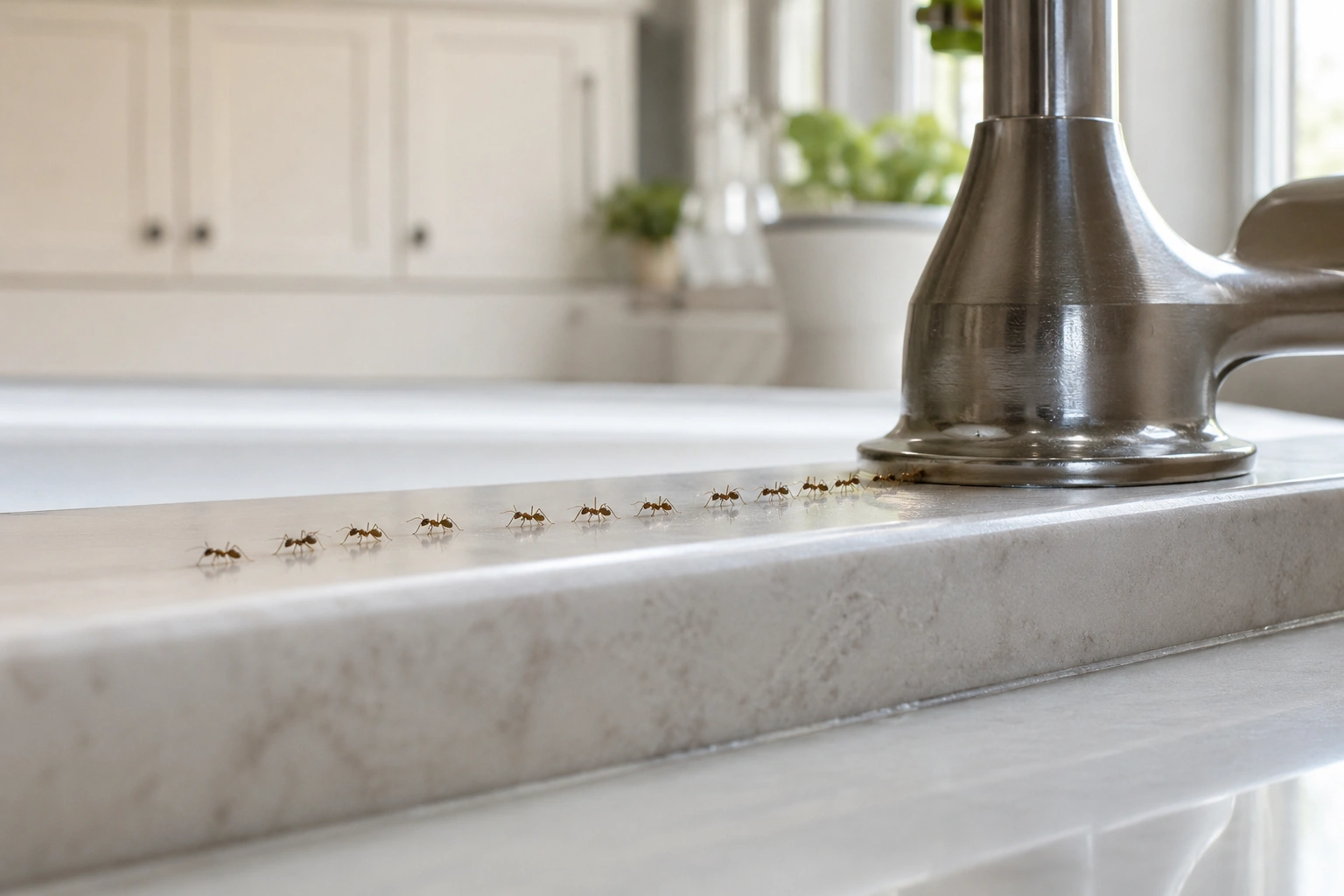
In summer, ants follow moisture indoors — which is why kitchens and bathrooms see the most activity.
June: ants take over
June is ant season in SoCal. Once daytime temperatures climb past the mid-80s, Argentine ant colonies ramp up foraging and head straight for the most dependable water source in the neighborhood — your home. They follow plumbing lines, slip through hairline gaps around windows and foundations, and form trails into kitchens and bathrooms. What makes them so frustrating is their structure: massive interconnected colonies with multiple queens, so killing the ants you can see does nothing to the colony underground. (More on that in our guide to keeping ants out of your SoCal home.)
July: wasps, yellowjackets, and rising rodent activity
By mid-summer, wasp and yellowjacket colonies have grown large, and they get noticeably more aggressive as they compete for food. Paper wasp nests under eaves, in patio covers, and around play structures become a real safety concern — especially for families and anyone with stinging-insect allergies (here’s how aggressive paper wasps actually get). July is also when rodents become a bigger problem than most people expect, slipping in through gaps in the roofline, vents, and garage doors.
August: peak pressure before the season turns
Late summer is when pest pressure peaks. Ant colonies have reached maximum size and push indoors in larger numbers as outdoor conditions get harsh. Spiders increase as they feed on the abundance of other insects. And for palm owners, the South American palm weevil — active March through November with a summer peak — is in its most dangerous window.
SoCal summer pest activity calendar
Use this at-a-glance calendar to see which pests are peaking each month — and what to prioritize.
| Pest | June | July | August | What to do |
|---|---|---|---|---|
| Argentine ants | Peak | Peak | Peak | Treat the colony + seal entry points |
| Wasps / yellowjackets | Building | Peak | Peak | Remove nests early, before they grow |
| Rodents (roof rats, mice) | Active | Active | Peak | Seal roofline & vent gaps |
| Spiders | Low | Active | Peak | Reduce other insects they feed on |
| South American palm weevil | Peak | Peak | Peak | Preventive palm treatment now |
Coastal vs. inland: why your summer pest risk differs
Southern California isn’t one climate — it’s several. Where your home sits changes which pests press hardest, and the treatment that works depends on it.
5 things homeowners can do right now
- Cut off the water. Fix dripping spigots and AC condensation lines and clear standing water. In summer, water draws more pests than food.
- Seal the highways. Caulk gaps around windows, doors, and where pipes enter the house. Most summer invaders enter through openings smaller than you’d think.
- Trim the bridges. Keep tree branches and shrubs from touching the roof and walls — they’re direct routes for ants and rodents.
- Manage the yard. Avoid overwatering landscaping, and move firewood and mulch away from the foundation.
- Don’t wait for a trail to become a line. An occasional ant by a door is normal. A daily trail along the baseboard is a signal — and the earlier it’s addressed, the simpler the fix.
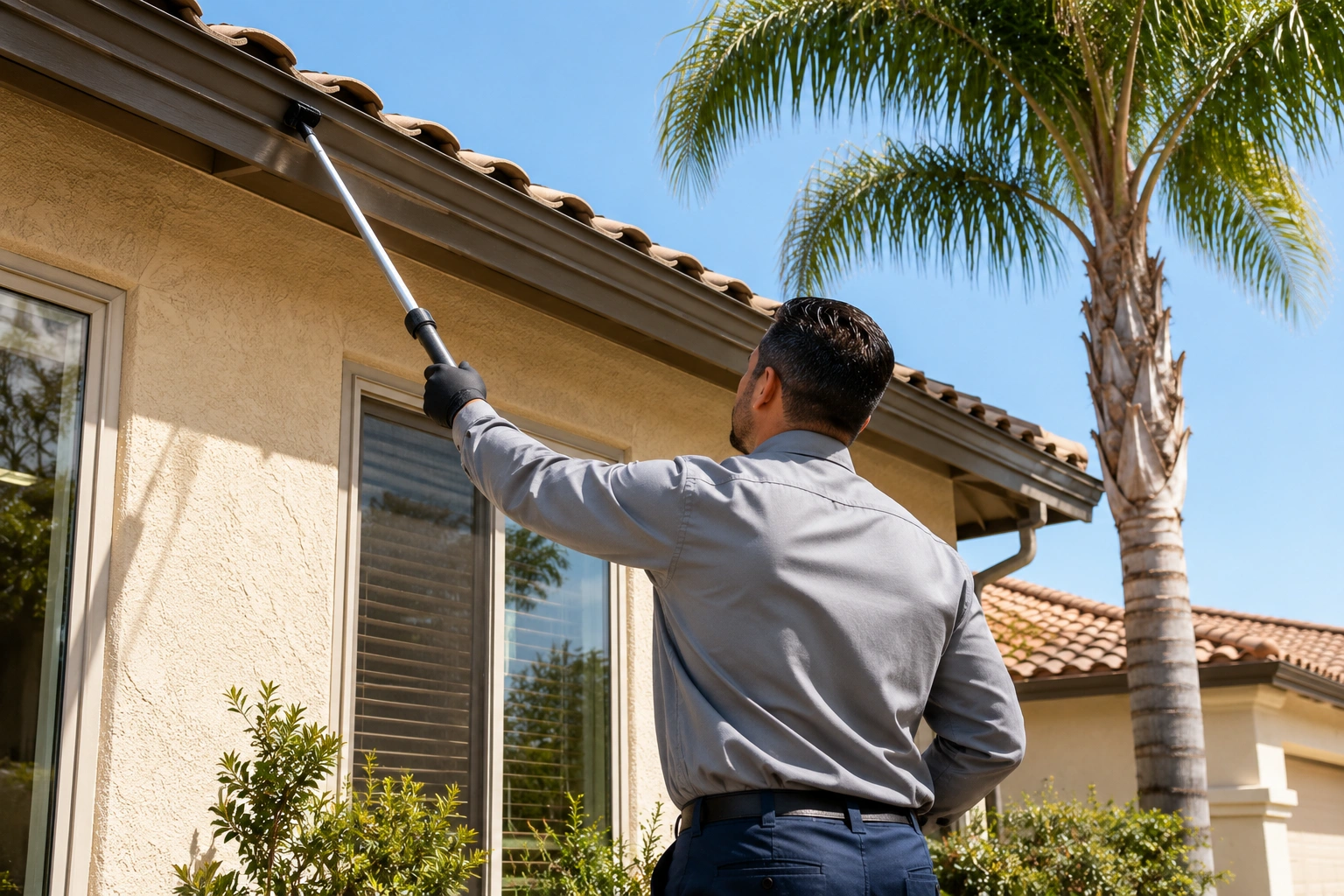
A summer inspection catches wasp nests, rodent entry points, and ant trails before they become infestations.
When to call a professional
If you’re seeing daily ant trails, a wasp nest larger than a golf ball, droppings or scratching in the walls or attic, or any signs of palm decline, it’s time for an inspection. A good pest control company will tell you what’s actually going on — no pressure, just a clear answer — and treat the source, not just the symptom.
At AG Pest Control, we’ve protected homes across San Diego, Orange County, and Riverside for over 40 years. We treat the colony and seal the entry points, we explain what we find in plain language, and we never push you into anything you don’t need. For authoritative background on ant biology and control, the UC Statewide IPM Program’s Ants Pest Notes is the best free reference for California homeowners.
Get ahead of summer pests
A quick inspection gives you a clear picture of what’s happening at your home — and what (if anything) to do about it. No pressure, ever.
Request a Free InspectionFrequently asked questions about summer pests in SoCal
Protect your home this summer
AG Pest Control serves San Diego, Orange County, and Riverside with no-pressure inspections and preventative programs. We treat the source — and explain everything in plain language.
Get a Free Quote