Termite Tenting vs. Local Treatment in Southern California: How to Choose
When an inspection finds termites, the first question is usually “Do we have to tent?” For a homeowner, that means a few nights away. For an HOA board or property manager, it means resident notices, scheduling, and a budget conversation. Here’s how to tell when tenting is the right call, when a targeted local treatment is enough, and what the inspection should show you first.

Tenting (whole-structure fumigation) treats every drywood termite infestation in a building at once, including colonies hidden inside walls, but everyone has to leave for several days. Local treatment targets only the wood with confirmed activity, so residents usually stay home, but it can only treat what the inspector can find and reach. The inspection, not a one-size-fits-all script, should decide which one fits.
- Tenting is for drywood termites. Subterranean termites live in the soil and need a different treatment.
- Tenting fits when activity is widespread, spread across units, or hidden behind finished walls.
- Local treatment fits when activity is limited and the infested wood is visible and reachable.
- HOAs should plan early for shared walls, attached units, and California’s notice rules.
- What’s the difference between tenting and local termite treatment?
- Drywood vs. subterranean termites: which ones does SoCal have?
- What are the signs of drywood termites?
- How does a termite inspection decide between tenting and local treatment?
- What should HOAs and property managers plan for?
- How do you prepare for termite tenting in California?
- What questions should you ask before choosing?
- Frequently asked questions
What’s the difference between tenting and local termite treatment?
Tenting covers the building with tarps and fills it with a fumigant gas that moves through the entire structure, reaching termites in walls, attics, and framing no one can see. UC’s Integrated Pest Management program defines whole-structure treatment as the simultaneous treatment of all infestations, accessible and inaccessible (UC IPM: Drywood Termites).
Local treatment (spot treatment) is applied directly to the infested boards: an injected liquid or foam, a borate wood treatment, localized heat, or replacing damaged wood. AG Pest offers localized treatments, eco-friendly borates, whole house (tent) fumigations, and Thermagation (heat treatment), so the recommendation can follow what the inspection finds.
| Tenting (whole structure) | Local treatment | |
|---|---|---|
| What it treats | Every infestation in the structure, seen and unseen | Wood with confirmed, reachable activity |
| Residents | Leave with pets and plants for several days | Usually stay home |
| Best for | Widespread or hidden drywood activity | Limited, visible drywood activity |
| Limits | No lasting residual; doesn’t treat subterranean termites | Won’t reach hidden infestations elsewhere |
Drywood vs. subterranean termites: which ones does SoCal have?
Both, and only one is a tenting candidate.
Drywood termites live inside the wood they eat and don’t need soil contact. UC IPM notes they are most prevalent in Southern California, and that their colonies are small, can be widely dispersed, and stay hidden deep inside wood. That’s why whole-structure treatment exists.
Subterranean termites nest in the soil and reach wood through mud tubes. Tenting doesn’t control them, because most of the colony is underground. They’re handled with soil treatments or baiting instead (UC IPM: Subterranean and Other Termites).
What are the signs of drywood termites?
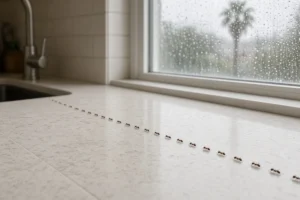
- Frass (fecal pellets). Small, hard pellets piling up on sills, floors, or garage surfaces. Drywood pellets have six flattened sides.
- Kick-out holes. Tiny openings, less than 2 mm across, that termites use to push pellets out of the wood.
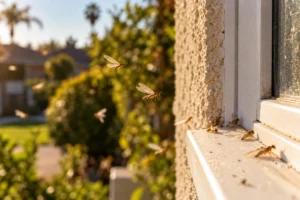
- Swarmers and shed wings. Winged termites flying by day in summer and fall, or discarded wings near windows.
- Damaged wood. Blistered paint, soft spots, or wood that sounds hollow.
A tip from UC IPM: sweep up a pellet pile and check again a few days later. Fresh pellets suggest active termites, while old pellets can remain after termites are gone.
How does a termite inspection decide between tenting and local treatment?
The California Structural Pest Control Board is clear: fumigation is not always required for drywood termites. If only a small area is infested, local applications may be used, and the inspector decides which treatment is necessary. The Board also cautions that localized treatments will not eradicate hidden infestations elsewhere in the building (SPCB fumigation fact sheet).
The inspection weighs a few questions:
- How many areas show activity? One window frame is very different from the attic, the eaves, and three units.
- Is the source visible or hidden? If pellets come from inside a finished wall, local treatment may not reach the colony.
- Can the wood be reached? Local treatment works best on exposed, accessible wood.
- Drywood, subterranean, or both? That decides whether tenting is even on the table.
Ask what the report documents. AG Pest technicians are State Certified Pesticide Applicators, and visits are documented. A clear report should show where activity was found and what the inspector recommends.
Tenting usually makes sense when activity shows up in several areas or attached units, pellets come from inside walls or ceilings, or earlier spot treatments haven’t solved the problem. Local treatment is often enough when activity is confined to one or two accessible spots, like a fascia board or exposed attic framing, and the rest of the structure shows no signs.
For multi-unit buildings, UC IPM notes that whole-structure heat can treat portions of large structures separately, which is useful in apartments and condominiums, with residents out for hours instead of days. Ask your inspector whether heat treatment is an option for your building.
What should HOAs and property managers plan for?
- Shared walls and attached units. Drywood colonies don’t respect unit lines, so the inspection should cover the whole building, not just the unit that called.
- One structure, one tent. Every unit under the tent has to be vacated. California’s Occupant Fumigation Notice also asks about pipes, common drains, air ducts, and other elements that could let fumigant pass into an adjoining structure that isn’t being treated.
- California’s notice rule. Under Civil Code Section 4785, an association may temporarily relocate occupants for wood-destroying pest treatment, with notice to occupants and owners 15 to 30 days ahead stating the reason, the treatment dates and times, and that occupants arrange their own accommodations (Civil Code §4785). Review your governing documents with your association’s counsel.
- Resident communication. Plan for renters, off-site owners, pets, and residents who need help with plants and food. Ask what notice and preparation materials your provider can share with residents.
How do you prepare for termite tenting in California?
Your fumigator provides a written prep list. At a general level, California requires (SPCB fumigation fact sheet):
- A signed Occupant Fumigation Notice before any fumigant is used, stating the target pest, fumigant, dates, and that no one may return until a Notice of Re-Entry is posted.
- Everyone out: all people, pets, and plants, including fish and seeds or bulbs for planting.
- Food and medicine not sealed in metal, glass, or highly resistant containers removed or sealed in protective bags.
- Warning signs and secondary locks on outside doors that only the company can open.
- Re-entry clearance. After aeration, the licensee in charge personally tests the structure and posts a Notice of Re-Entry with the release date and time. Don’t go back in before it’s posted.
The SPCB says a fumigation can take from six hours to one week, depending on the structure, dosage, and temperature. Your inspector can explain the expected schedule for your building and how gas shut-off and turn-on will be coordinated.
What questions should you ask before choosing?
- Which termite did you find, and where exactly is the activity?
- Is it visible and reachable, or hidden inside walls?
- If you recommend local treatment, could activity be elsewhere in the building?
- If you recommend tenting, how long will residents be out, and which attached units are involved?
- What follow-up comes after treatment? Ask whether follow-up inspections or a warranty are included, and get the terms in writing.
AG Pest has provided pest management in California since 1982, serving homeowners, HOAs, and property management companies across San Diego, Orange County, and Riverside. We start with the inspection and explain what we found in plain language. Learn more about termite control in San Diego County, Orange County, and Riverside County.
Not sure whether to tent or treat the spot?
Start with a free termite inspection. We’ll show you what we found and walk you through your options.
Schedule a Free Termite InspectionFrequently asked questions
Termite questions for your home or community?
We’ll inspect, document what we find, and explain your options.
Request a Free Termite Inspection