Why Ants Invade After the First Rain in Southern California (and How to Stop Them)
It happens every fall. After months of dry weather, the first real rain rolls in, and the next morning there’s a line of tiny brown ants marching across the kitchen counter. It isn’t bad luck and it isn’t a dirty house. Ants after rain in Southern California are usually Argentine ants doing exactly what they always do when their shallow nests flood: moving the whole operation somewhere dry. Here’s why the first rain triggers it, where they get in, and how to stop it before the next storm.
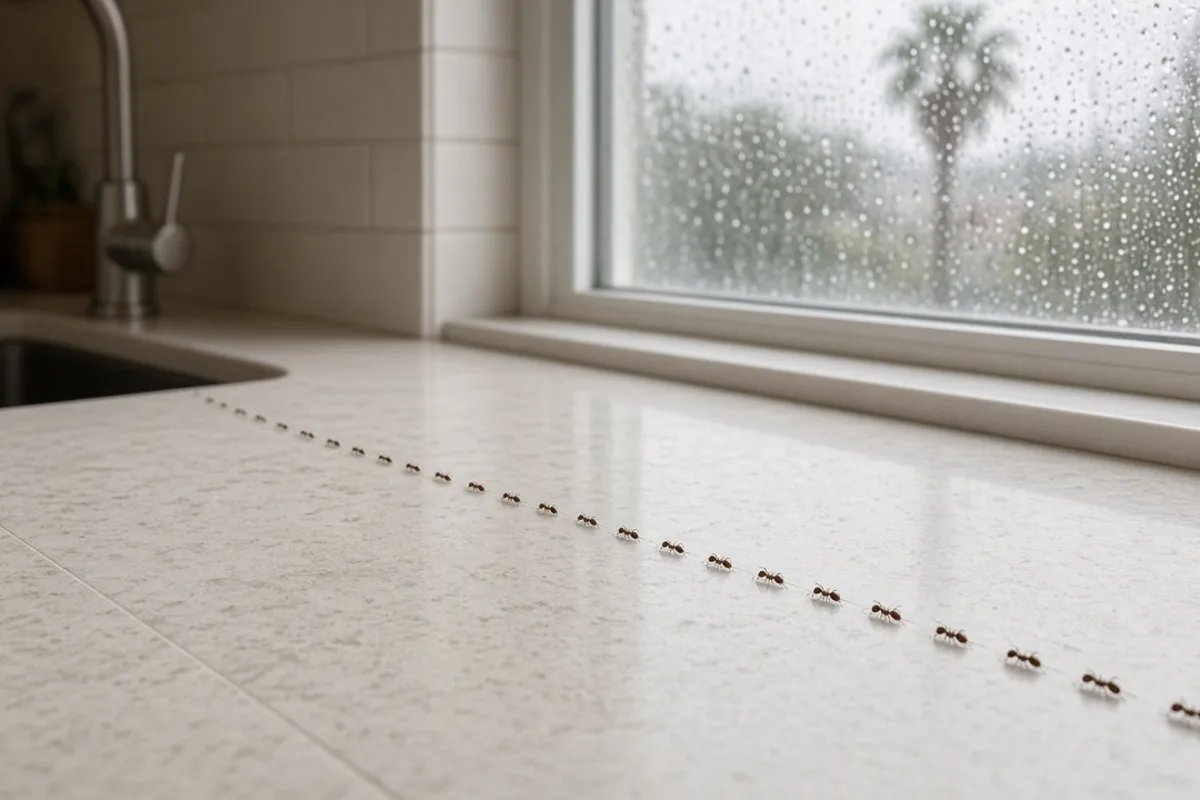
Ants invade Southern California homes after the first fall rain because the rain floods their shallow outdoor nests, and the colony moves to the nearest dry shelter with food and water: your house. The rain is the trigger, not the cause. The colony was already living along your foundation.
- The usual culprit is the Argentine ant: small, brown, and moving in long trails.
- Spraying the trail kills the ants you see, not the colony outside.
- Follow the trail, wipe it with soapy water, seal the entry gap, and treat the colony outdoors.
- The best time to prevent the next invasion is the dry week before the next storm.
Why does the first rain send ants indoors?
Most of the ants that invade Southern California homes nest shallow: just under the soil surface, beneath pavers, along foundations, and under mulch. All summer, that’s a comfortable place to live. Then the first significant fall rain saturates the top few inches of soil, and those nests flood. The colony has two options: drown or move. Your house, dry, warm, and full of food and water, is the obvious choice.
That’s why ant calls spike in a predictable pattern: a burst right after the first rain of the season, then again with each heavy storm. The colonies were already there, already large after a long warm season; the rain just tells them it’s time to relocate. (For the full picture of what else moves in this time of year, see our fall pest control guide.)
| Conditions | Indoor ant pressure | What’s happening outside |
|---|---|---|
| Late summer heat | Active | Ants forage indoors for water |
| First fall rain | Peak | Shallow nests flood; colonies relocate |
| Each heavy winter storm | Peak | Repeat flooding pushes new waves inside |
| Dry spells between storms | Lower | Some colonies move back outdoors |
Which ants invade Southern California homes after rain?
Want the full breakdown of local species and treatment options? See our ant control guide for San Diego.
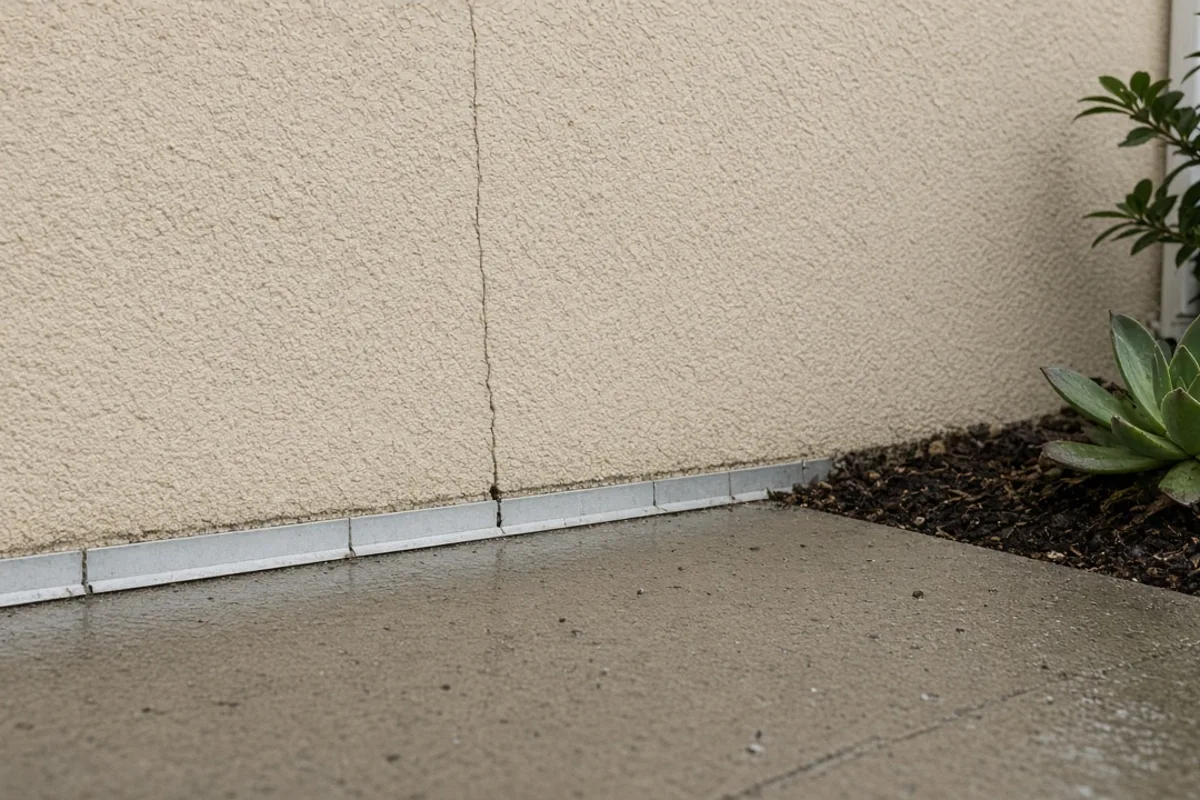
Ants usually enter along the foundation line, following cracks, weep screeds, and utility penetrations.
Where do ants get into Southern California homes?
Argentine ants are small enough to use openings you’d never notice. The same handful of entry points show up on almost every home we inspect in the fall:
- The foundation line. Hairline cracks in slab edges and the gap where stucco meets the walkway or patio.
- Utility penetrations. Where plumbing, AC line sets, cable, and gas lines pass through the wall, often around kitchen sinks and bathroom vanities.
- Window and door frames. Worn weatherstripping, sliding-door tracks, and gaps beneath thresholds.
- Landscaping bridges. Shrubs, vines, and mulch touching the house give ants a dry highway straight to the wall.
- Electrical outlets and switch plates. Ants follow wiring voids inside walls and pop out where you least expect them.
What should each county expect this fall?
What mistakes make an ant invasion worse?
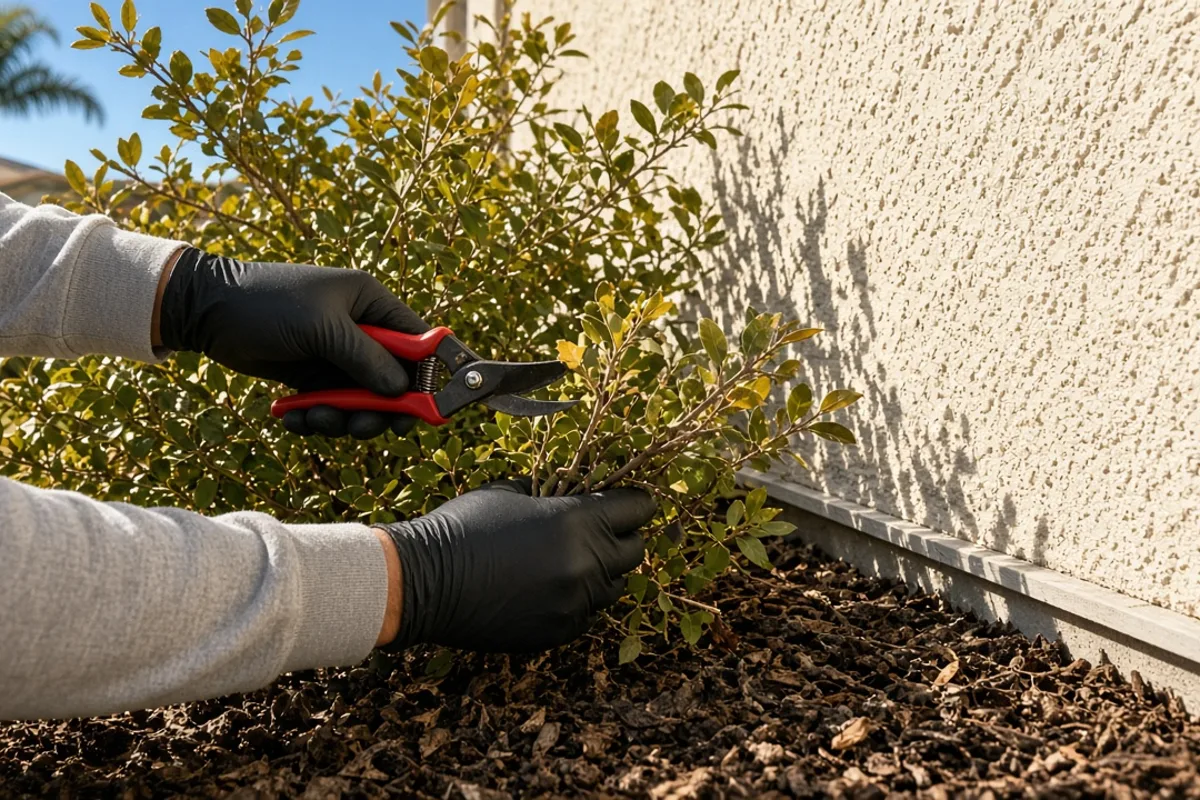
Cutting landscaping back from the walls removes the dry highway ants use to reach your home during storms.
How do you stop ants before the next rain?
The best time to stop a rain-driven ant invasion is the dry week before it. These steps are simple, and together they make a real difference:
- Seal the obvious gaps. Caulk around kitchen and bathroom plumbing, the foundation line, and window frames. Replace worn door sweeps.
- Pull mulch and plants back. Aim for several inches of clear space between landscaping and the walls.
- Fix leaks and drips. A slow drip under a sink is a year-round water source that ants will find and defend.
- Store food tight. Sugar, cereal, pet food, and fruit bowls are the usual magnets. Airtight containers help more than any spray.
- Clean the scent trails. Ants follow chemical trails. A wipe-down with soapy water erases the map.
- Treat the outside, not just the inside. A professional perimeter program with baits placed where colonies actually live is what keeps the next storm from becoming the next invasion.
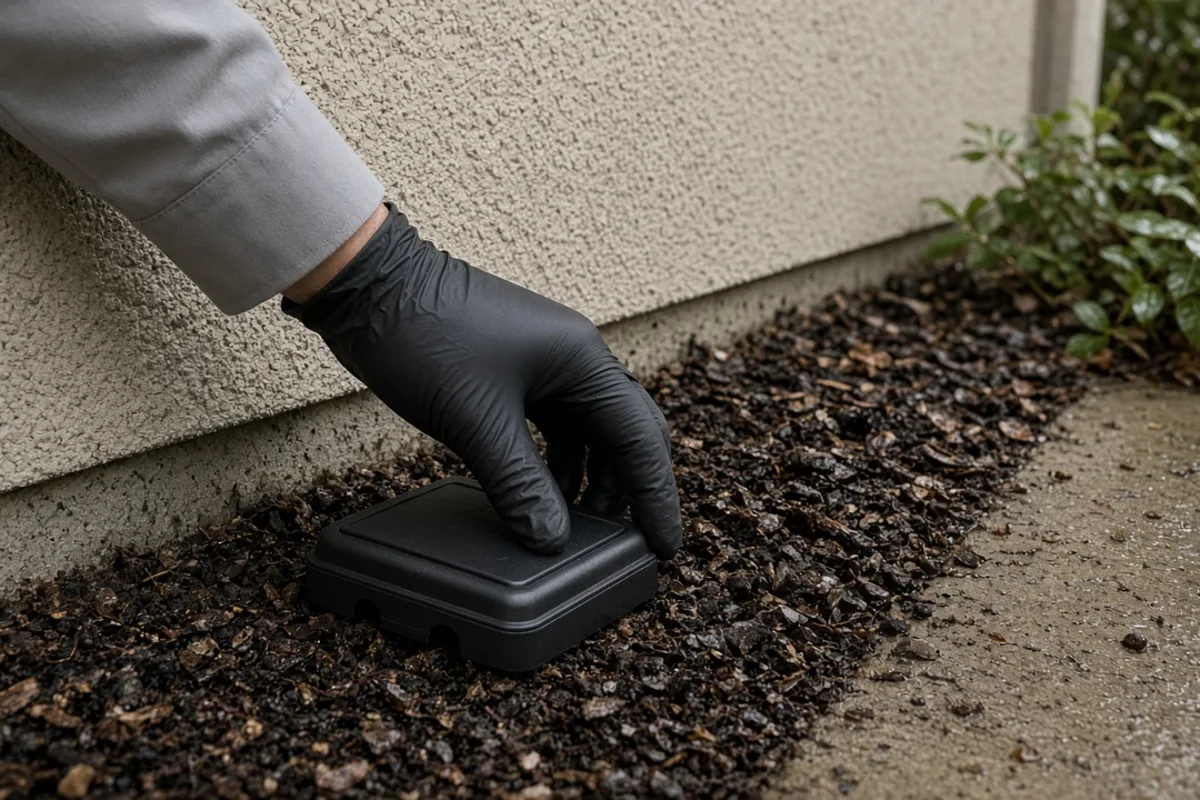
Slow-acting baits placed where colonies live let workers carry treatment back to the queens.
AG Pest has handled seasonal ant pressure across San Diego, Orange County, and Riverside since 1982. We find where the ants are coming from, treat the source instead of the symptom, and explain what we did in plain language. For the research behind this approach, the UC Statewide IPM Program’s guide to ants is the best free reference for California homeowners. And while fall is on your mind, read up on drywood termite swarm season, which overlaps with the first rains.
Ants back every time it rains?
We’ll find where they’re getting in and treat the colony at the source, so the next storm doesn’t bring them back. No pressure, ever.
Request a Free InspectionFrequently asked questions about ants after rain
Year-round ant protection for Southern California homes
AG Pest offers one-time services or ongoing maintenance that treats the source outside your home, documented every visit and explained in plain language.
Get a Free Quote