
Black Widow vs. Brown Widow Spiders in San Diego: How to Tell Them Apart (and Keep Them Out)

Mottled tan brown widow spider with banded legs under outdoor patio furniture next to its spiky egg sac in San Diego

Table of Contents

Spider Guide · San Diego

Black Widow vs. Brown Widow Spiders in San Diego: How to Tell Them Apart (and Keep Them Out)

By the AG Pest Team · Updated October 2026 · 7 min read · San Diego County

If you grew up in San Diego, you learned to look for the shiny black spider with the red hourglass. But walk around most San Diego yards today and the widow you’re more likely to find is a mottled tan-and-brown one tucked under the patio furniture: the brown widow. Fall is when both are easiest to spot, and when they’re most likely to turn up around your home: black widows in garages, brown widows under patio furniture and play sets. Here’s how to tell them apart, how worried to be, and how to keep them out.
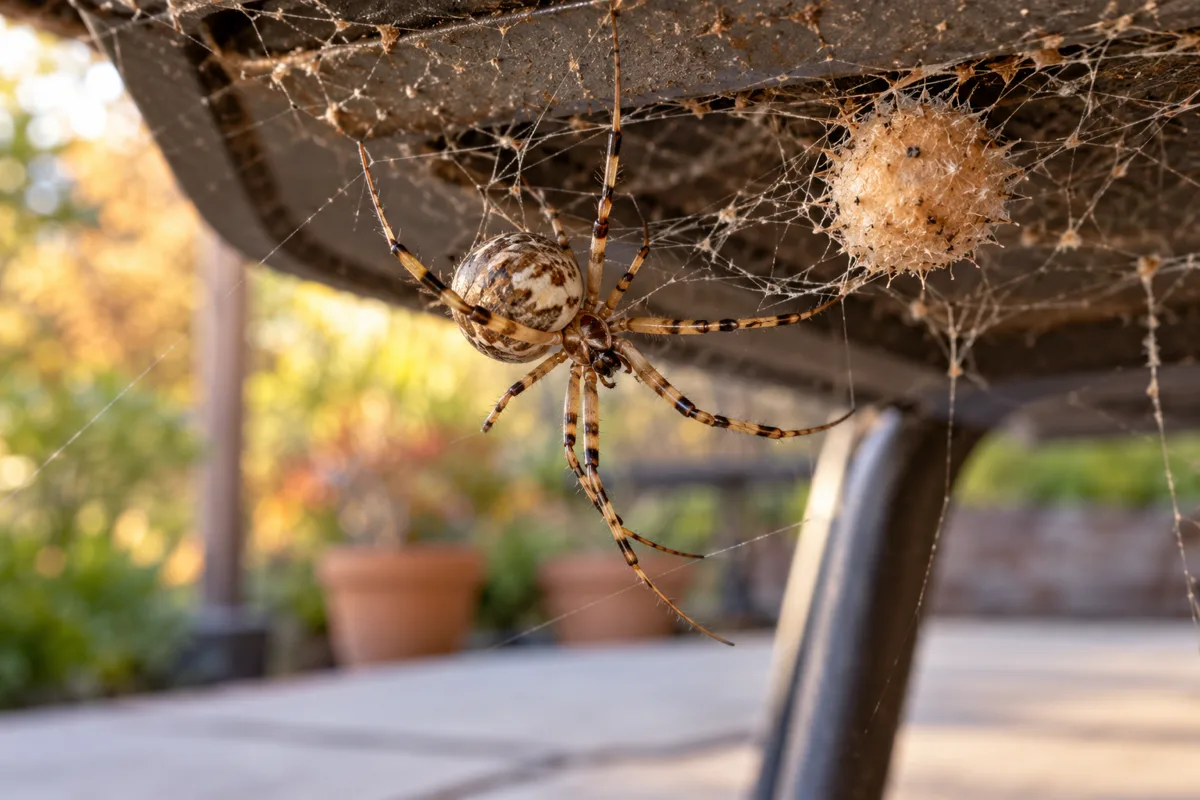
Mottled tan brown widow spider with banded legs under outdoor patio furniture next to its spiky egg sac in San Diego
Brown widows are mottled tan and brown with banded legs, and their spiky egg sacs are the easiest sign they are around.
Quick answer

The black widow is shiny black with a red hourglass and hides in low, dark spots. The brown widow is tan to brown and mottled with an orange hourglass, and it shows up in more open spots around patios and play sets. The fastest tell is the egg sac: spiky for brown widows, smooth, yellowish and teardrop-shaped (tapered at the top) for black widows.

  • Black widow: woodpiles, garages, meter boxes, and other dark, undisturbed spots.
  • Brown widow: patio furniture, play sets, and chain-link fences.
  • Both bite only defensively, and bites are uncommon. The black widow’s bite is the more serious of the two.
  • Wear gloves when clearing clutter, and vacuum webs and egg sacs from eaves and outdoor furniture.

San Diego’s two widow spiders

California has two widow spiders, and San Diego County has plenty of both. The western black widow is the native species most of us grew up with. The brown widow is a relative newcomer, an introduced species that has spread rapidly across Southern California since it was first noticed here in the early 2000s (UC Riverside Center for Invasive Species Research).

University of California researchers have documented how quickly the brown widow has taken hold, and many Southern California residents now report that where they used to find a few black widows, they mainly find brown widows, often in larger numbers. In much of urban San Diego, the brown widow has become the widow you’re most likely to meet.

Western black widow
Latrodectus hesperus
Mature females are glossy black with a red hourglass on the underside of a large round abdomen. Native to California. Prefers dark, undisturbed, sheltered spots: woodpiles, utility boxes, crawl spaces, and the corners of garages.
Native · more potent bite
Brown widow
Latrodectus geometricus
Mature females are smaller, about 3/8 inch (10 mm) in body length, compared with about 1/2 inch for a mature female black widow (UC IPM), with mottled tan, brown, and gray coloring and an orange hourglass underneath. Introduced and now widespread. Comfortable in more open, exposed spots: under patio furniture, inside play equipment, and on chain-link fences.
Introduced · now very common

How to tell them apart in a few seconds

  • 1
    Color. Black widow: shiny, solid black. Brown widow: tan, brown, and gray with a mottled or banded pattern, though some brown widows are quite dark.
  • 2
    Hourglass. Black widow: red. Brown widow: usually orange rather than vivid red. (Both are on the underside, so don’t go looking up close.)
  • 3
    Egg sac: the easiest tell. Black widow egg sacs are smooth, yellowish and teardrop-shaped (tapered at the top). Brown widow egg sacs are covered in little pointed spikes, like a tiny sea mine. If you see spiky sacs, you have brown widows.
  • 4
    Location. Black widows hide in dark, enclosed spaces. Brown widows are bolder about open, exposed spots on and around outdoor furniture.
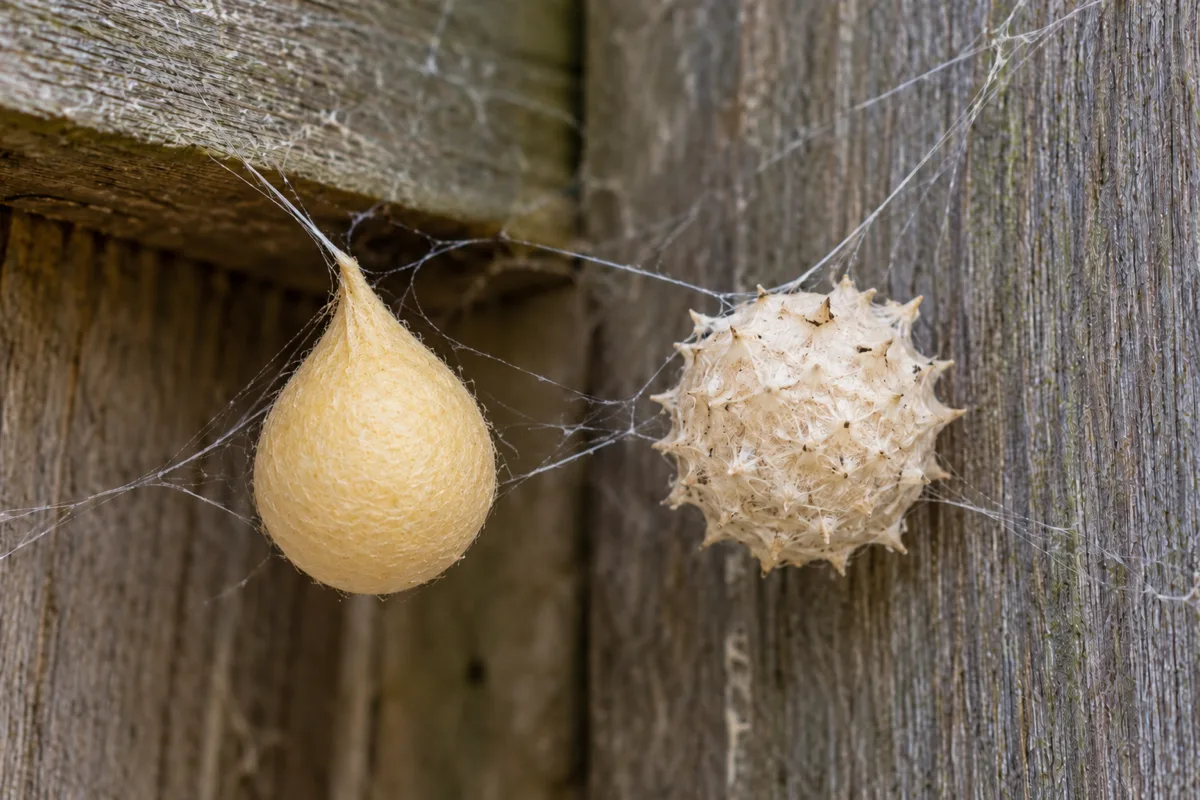
Two widow spider egg sacs on weathered wood, a smooth, yellowish, teardrop-shaped black widow egg sac on the left and a spiky brown widow egg sac on the right
The egg sac is the fastest tell: black widow sacs are smooth, yellowish and teardrop-shaped (tapered at the top), while brown widow sacs are covered in spiky tufts of silk.

Why you see more widows in fall

Late summer and fall are when spider populations in Southern California peak. Spiders that hatched in spring are now full-sized, males are wandering in search of mates, and cooling nights push some of them toward sheltered spots: garages, patios, and the edges of homes. That’s why September and October bring the “suddenly there are spiders everywhere” calls. (It’s one of several seasonal shifts in our fall pest control guide.)

There’s also a food-chain reason. Spiders follow prey. When fall rain and cooler weather drive ants, flies, and other insects toward your home, the spiders aren’t far behind. Controlling the insects around your home is one of the most effective long-term ways to reduce spiders. (See why ants invade after the first rain.)

Where widows hide around San Diego homes

Coastal San Diego
Patios, railings, beach gear
Brown widows thrive on outdoor furniture, deck railings, and stored surfboards and beach chairs in coastal neighborhoods from Oceanside to Imperial Beach.
Central & South County
Block walls, meters, play sets
Gaps in block walls, utility meter boxes, kids’ play equipment, and the undersides of trash bins are favorite spots in established neighborhoods.
North & East County
Woodpiles, sheds, garages
Larger lots in areas like Escondido, Ramona, and El Cajon mean more woodpiles, sheds, and stored equipment, classic black widow habitat.
  • 1
    Garages. Corners, shelving, stored boxes, and the gap under the garage door.
  • 2
    Outdoor furniture. The undersides of chairs, tables, and cushions, especially pieces that rarely move.
  • 3
    Kids’ play areas. Inside slides, under play-set platforms, and in stored outdoor toys.
  • 4
    Utility boxes and meters. Always look before reaching into a meter box or irrigation valve cover.
  • 5
    Shoes, gloves, and gear left outside. Shake them out before putting them on.
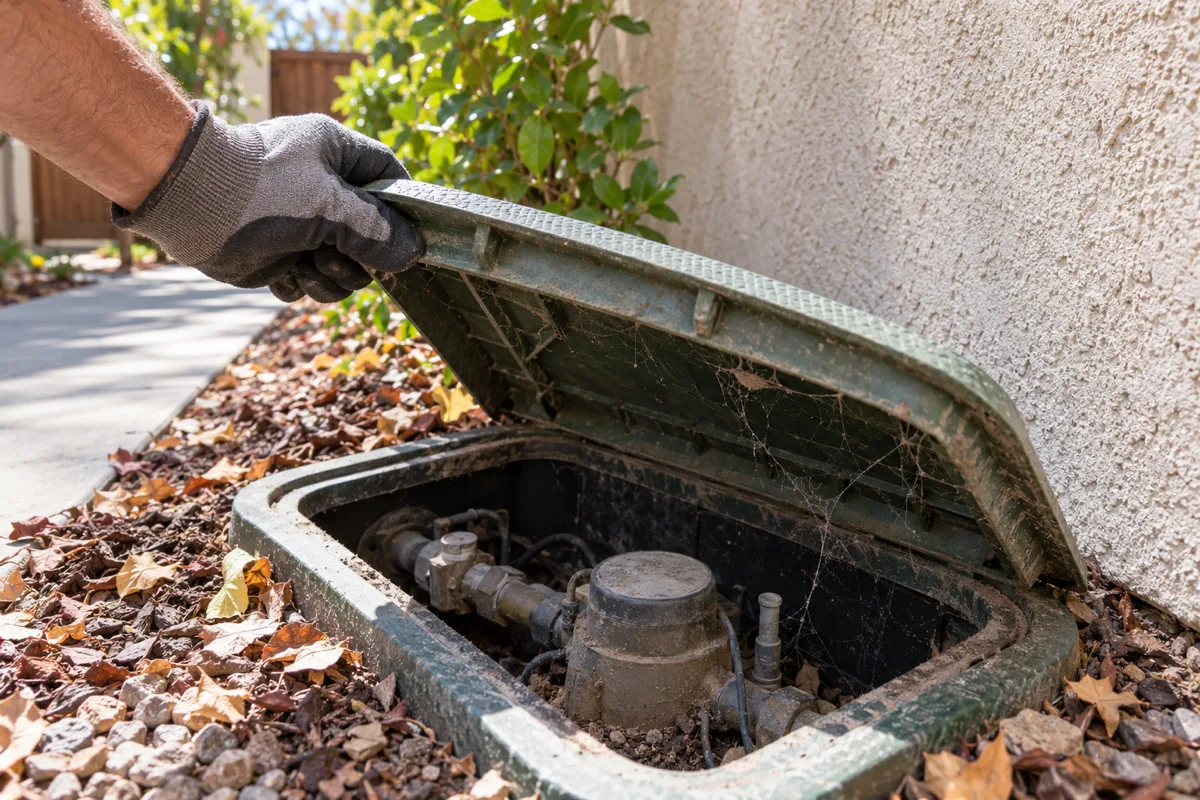
A gloved hand lifting the lid of a residential water meter box to check for spider webs in San Diego
Wear gloves and look first. Meter boxes, garage shelves, and stored gear are favorite widow hiding spots.

Bite risk: how worried should you be?

Both widows are shy. They bite defensively, usually when they’re pressed against skin, like a hand reaching into a glove or a foot sliding into a shoe. They don’t chase people, and bites are uncommon.

Brown widow
Its venom is potent, but it delivers far less of it, and UC researchers describe its bite as much milder than the black widow’s (UC IPM). Most bites hurt when they happen and cause burning pain at the bite site. Its arrival is not a cause for alarm.
Western black widow
The more medically significant of the two. A bite can cause muscle pain, cramping, and other symptoms that warrant medical attention, especially for young children, older adults, and anyone with health conditions.
If someone is bittenStay calm, wash the area with soap and water, and apply a cool compress. Call Poison Control at 1-800-222-1222 for guidance (poison.org), and seek medical care promptly for any widow bite in a child, an older adult, or anyone with severe pain, cramping, or difficulty breathing. If possible, safely capture or photograph the spider for identification.

How to keep widows away from your home

  • 1
    Declutter the garage. Store items in sealed plastic bins instead of cardboard boxes, and keep things off the floor.
  • 2
    Move woodpiles away from the house. Keep firewood off the ground and well away from walls.
  • 3
    Knock down webs and egg sacs. Use a long-handled broom or vacuum (then empty it outdoors). Removing the spiky brown widow sacs makes a big difference over time.
  • 4
    Seal gaps. Replace worn garage door seals and door sweeps; seal cracks around windows and utility penetrations.
  • 5
    Rethink outdoor lighting. Bright white lights draw the insects spiders eat. Warmer or yellow “bug” bulbs near doors help.
  • 6
    Treat the prey, not just the spider. A professional program that reduces insects around the perimeter, plus targeted web and egg-sac removal, does more than any spray can.

Garage storage organized in sealed clear plastic bins on metal shelving, raised off the floor in a Southern California home
Sealed bins instead of cardboard boxes take away the undisturbed hiding spots widows look for.
AG Pest tip: Make “flip and look” a habit. Before you pull out the patio cushions, grab the kids’ outdoor toys, or reach into the meter box, flip it and look underneath. It’s the single easiest way to avoid a bite.

AG Pest has helped San Diego families manage spiders and the insects that feed them for over 40 years. Our technicians know where widows hide in local homes, and we’ll explain what we find and what we treated in plain language. For the research-based background, the UC Statewide IPM Program’s Pest Notes on widow spiders is the best free reference. And if you’ve found termite pellets while cleaning out the garage, our guide to termite tenting vs. local treatment explains your options. Learn more about pest control in San Diego County.

Seeing widows around your San Diego home?

We’ll find where they’re living, remove webs and egg sacs, and reduce the insects that keep drawing them in.

Request a Free Inspection
Serving all of San Diego County · Call (800) 696-8565

Frequently asked questions about widow spiders in San Diego

How do I tell a brown widow from a black widow?⌄
Western black widows are glossy solid black with a red hourglass on the underside. Brown widows are smaller, mottled tan, brown, and gray, with an orange hourglass. The easiest tell is the egg sac: black widow sacs are smooth, yellowish and teardrop-shaped (tapered at the top), while brown widow sacs are covered in small pointed spikes.
Are brown widow spiders dangerous?⌄
Brown widow venom is potent, but the spider delivers much less of it, and University of California researchers describe its bite as much milder than the western black widow’s. Most brown widow bites hurt when they happen and cause burning pain at the bite site. Its spread in Southern California is not considered a cause for alarm, though any bite in a child, older adult, or person with severe symptoms should be checked by a medical professional.
Are brown widows replacing black widows in San Diego?⌄
The brown widow appears to be displacing the western black widow in some habitats, especially urban areas. Many Southern California residents report that where they once found a few black widows, they now mainly find brown widows, often in larger numbers. Both species are still found in San Diego County.
Why are there more spiders in fall?⌄
Spider populations in Southern California peak in late summer and fall. Spiders that hatched in spring are full-grown, males wander in search of mates, and cooler nights push some toward sheltered spots like garages and patios. Fall rain and cooler weather also drive insects toward homes, and spiders follow their prey.
What should I do if I am bitten by a widow spider?⌄
Wash the bite with soap and water and apply a cool compress. Call Poison Control at 1-800-222-1222 for guidance. Seek prompt medical care for any widow bite in a child or older adult, or for anyone with severe pain, muscle cramping, or difficulty breathing. If it is safe, capture or photograph the spider for identification.
How do I get rid of widow spiders around my house?⌄
Declutter garages and store items in sealed plastic bins, move woodpiles away from the house, knock down webs and egg sacs with a long-handled broom or vacuum, seal gaps around doors and windows, and use warmer outdoor lighting that attracts fewer insects. A professional program that reduces the insects around your perimeter and removes webs and egg sacs is the most effective long-term approach.

Spider control for San Diego homes and businesses

AG Pest’s scheduled programs target spiders and the insects that feed them, documented every visit, explained in plain language.

Get a Free Quote

Questions? Call (800) 696-8565. We’re happy to walk you through your options.

AG
AG Pest Team
State Certified Pesticide Applicators · Southern California

This article was written and reviewed by the AG Pest Team serving San Diego, Orange County, and Riverside County. Since 1982, AG Pest has provided residential and commercial pest management across Southern California, with divisions specializing in general pests, rodents, termites, birds, and plant health care. Our technicians are State Certified Pesticide Applicators. Recommendations reflect integrated pest management (IPM) practices for Southern California.

State Certified Pesticide Applicators Since 1982 40+ Years SoCal IPM Approach

Leave a Reply

Your email address will not be published. Required fields are marked *

More From the blog

Call Now Button