
Fall Pest Control in Southern California: Your September–November Guide
Fall is the season pests stop visiting Southern California homes and start moving into them. As nights cool, roof rats hunt for attics, drywood termites launch their swarming flights, and spiders hit their yearly peak — all while our mild climate keeps ants and mosquitoes going strong. September through November is the most important prevention window of the year, because what gets inside now is what you’ll be evicting in January. Here’s the month-by-month picture, and what actually keeps them out.

What pests are most active in fall in Southern California?
The short answer: rodents, drywood termite swarmers, spiders, invasive Aedes mosquitoes, and — for palm owners — the South American palm weevil. Fall in SoCal isn’t a wind-down; it’s a redirection. Cooler nights and shorter days tell rodents to find shelter, trigger termite reproductives to fly, and push spider populations to their mating peak after a whole summer of feeding. The pests that spent summer in your yard spend fall looking for a way through your walls. (For the previous stretch of the season, see our late-summer pest guide.)
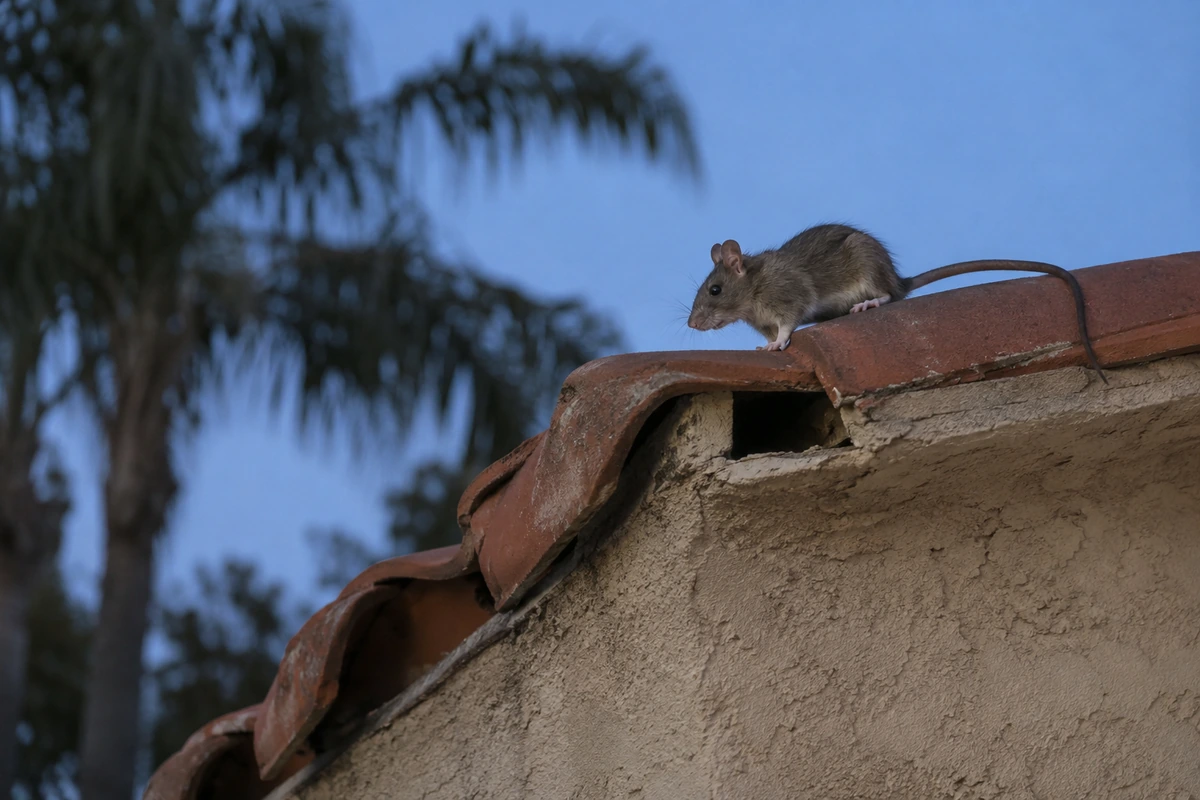
In fall, roof rats stop foraging outdoors and start looking for a warm place to nest.
September: swarmers fly and rodents start scouting
September is the month the season turns. Western drywood termites begin their swarming flights — daytime flights of winged reproductives that continue through November and are often triggered by hot, dry Santa Ana conditions. A swarm near your home is not proof of damage to your home, but it is a signal worth acting on. At the same time, roof rats and mice begin scouting rooflines, vents, and garage doors for a way in, and spiders enter their mating peak, which is why you suddenly see far more of them. Invasive Aedes mosquitoes, meanwhile, are still in their peak window and biting during the day.
October: the move indoors accelerates
By October the pattern is in full swing. Rodent pressure climbs sharply as nights cool, and this is the month most SoCal homeowners first hear scratching overhead. Spiders remain at peak. Termite swarms continue. If you only do one thing this fall, do it in October: seal the roofline. Rodents need a gap the size of a quarter — a roof rat can work through about half an inch — and every unscreened attic vent is an open door.
November: the quiet month that isn’t
November feels calm from the curb, and that’s exactly the problem. The rodents that got in during September and October are now nesting, breeding, and chewing insulation and wiring where nobody can see them. Late-season termite swarms taper. And because our climate never really shuts pests down, ants continue trailing indoors toward water and warmth. November is when a fall prevention plan quietly pays for itself — or when a skipped one starts costing money.
SoCal fall pest activity calendar
Use this at-a-glance calendar to see which pests are peaking each month — and what to prioritize.
| Pest | September | October | November | What to do |
|---|---|---|---|---|
| Roof rats & mice | Peak | Peak | Peak | Seal roofline, vents & utility gaps now |
| Drywood termite swarmers | Peak | Peak | Active | Note where swarms occur; book an inspection |
| Spiders | Peak | Peak | Active | Reduce the insects they feed on; clear clutter |
| Invasive Aedes mosquitoes | Peak | Active | Lower | Dump standing water weekly — even bottle caps |
| Argentine ants | Active | Active | Active | Bait the colony + seal entry points |
| South American palm weevil | Active | Active | Tapering | Continue preventive palm treatment |
The five fall pests worth knowing
Coastal vs. inland: why your fall pest risk differs
Southern California isn’t one climate — it’s several. Where your home sits changes which pests press hardest in fall, and the right treatment depends on it.
7 things homeowners can do right now
- Seal the roofline and screen every vent. Attic and crawl-space vents should be screened with quarter-inch hardware cloth. This single step prevents more fall rodent problems than anything else you can do.
- Trim the bridges. Keep tree branches, palm fronds, and vines four to six feet back from the roofline. Roof rats are climbers — overhanging branches are a ramp straight to your attic.
- Close the utility gaps. Look where AC lines, plumbing, and cabling enter the wall. These penetrations are the second most common rodent entry point after the roofline, and they’re easy to seal properly.
- Note where swarmers appear. If you see winged insects flying by day in September or October, take a photo and note the location. Swarmers near a structure are the cheapest early warning a homeowner ever gets.
- Dump standing water weekly. Plant saucers, buckets, clogged gutters, pet bowls, and forgotten toys. Invasive Aedes mosquitoes breed in a surprisingly small amount of water, and they don’t travel far — if you’re being bitten, the source is usually on your own property.
- Clear the ground-level clutter. Stacked pots, woodpiles, cardboard, and unused patio furniture are exactly the undisturbed, low, dark spaces black widows prefer. Move it off the ground and off the wall.
- Act on the first sign, not the third. One scratch overhead, one pellet pile, one daily ant trail. Fall problems compound fast because the pest is now living inside — and the earlier it’s addressed, the simpler and cheaper the fix.
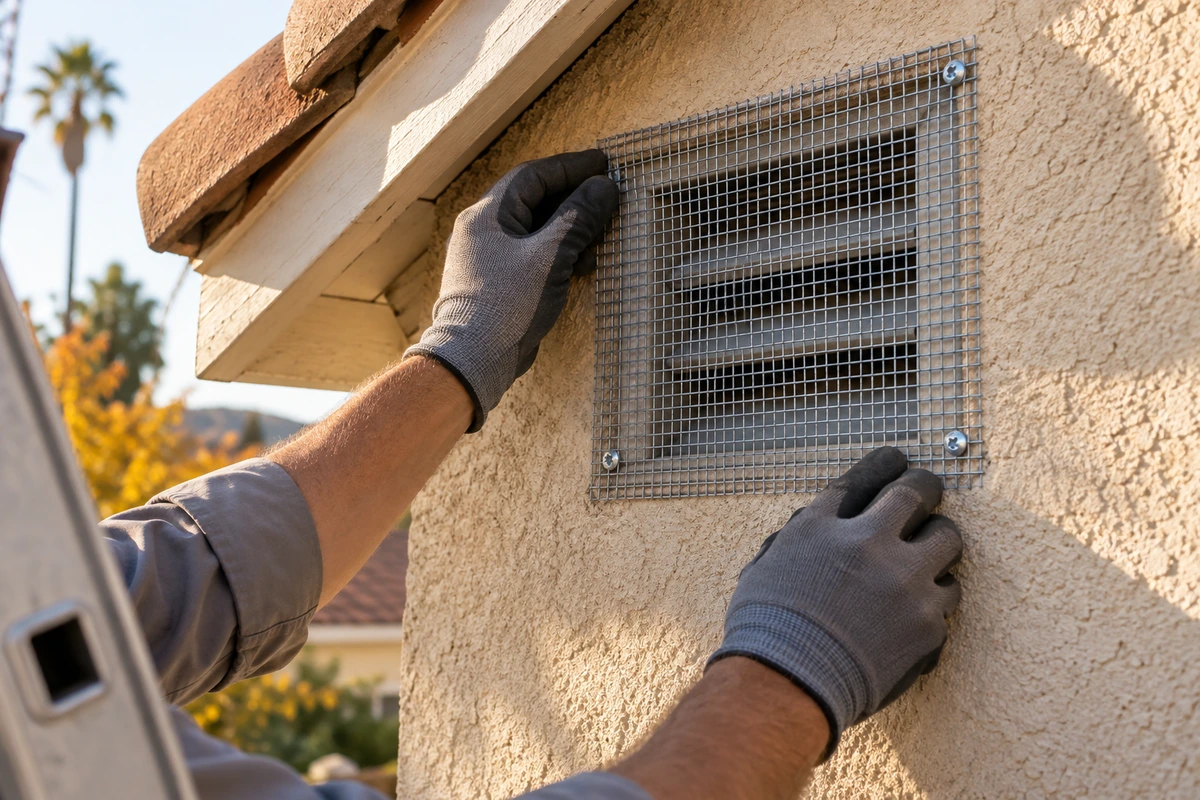
Fall exclusion work — screening vents and sealing gaps — is what keeps winter’s rodents outside.
When to call a professional
Book an inspection if you’re hearing scratching or scurrying overhead at night, finding droppings in the garage or attic, seeing winged insects swarming by day, discovering piles of tiny wood-colored pellets near baseboards or window sills, noticing heavy low webbing around the garage or patio, or watching a palm’s central spear droop. Any one of these is worth a look. Together, they’re a fall pattern we see every year across all three counties.
At AG Pest, we’ve protected homes across San Diego, Orange County, and Riverside for over 40 years. We inspect the whole structure, seal the entry points rodents actually use, treat the source rather than the symptom, and tell you plainly what we found — including when the answer is “nothing to worry about yet.” For authoritative background on fall swarming and drywood termites in California, the UC Statewide IPM Program’s drywood termite guidance is the best free reference available to homeowners. You can also read our detailed breakdown of drywood termite swarm season.
Get ahead of the fall move indoors
A quick inspection gives you a clear picture of what’s happening at your home — and what (if anything) to seal before winter. No pressure, ever.
Request a Free InspectionFrequently asked questions about fall pests in SoCal
Protect your home through fall and winter
AG Pest serves San Diego, Orange County, and Riverside with no-pressure inspections and preventative programs. We treat the source — and explain everything in plain language.
Get a Free Quote