Restaurant & Commercial Kitchen Pest Control in Southern California: What Health Inspectors Look For
In a restaurant, pests aren’t just a nuisance — they’re a health-code violation, a bad review waiting to happen, and in the worst case, a temporary closure. In Southern California’s warm climate, the pressure runs year-round and peaks in the heat of late summer, when cockroaches, flies, and rodents are most active. The restaurants that pass inspection cleanly, month after month, almost always have the same thing in common: a real, documented pest program running quietly in the background — not a phone number they call after an inspector writes them up.
Why food-service pest control is different
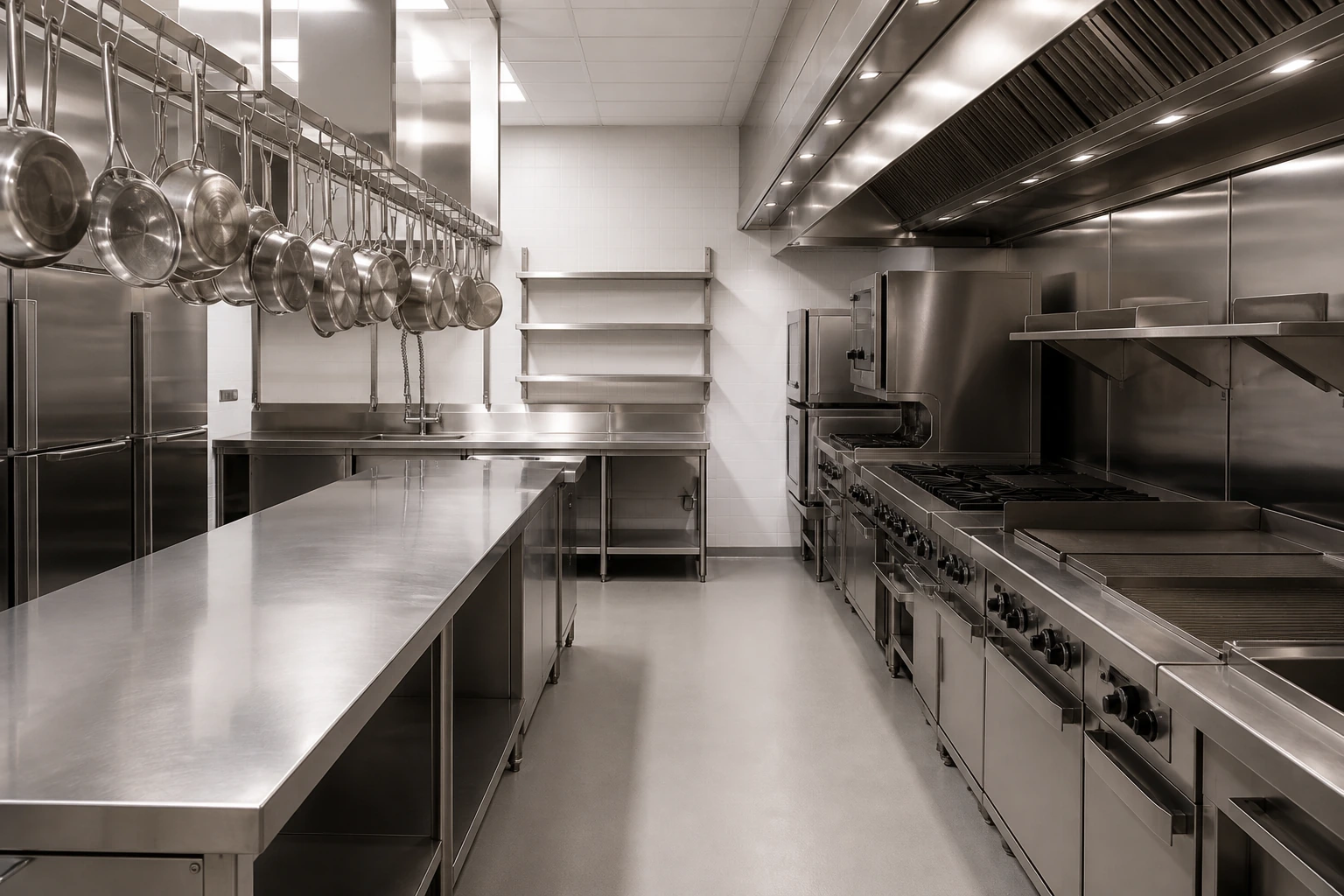
A pest problem in an office is an annoyance. In a commercial kitchen, it’s an existential risk. Food, warmth, water, and constant deliveries make restaurants one of the most attractive environments a pest can find — and the same regulations that protect diners mean a single sighting during an inspection can cost you points, a re-inspection, or a closure. The stakes aren’t just financial; they’re reputational, and in the age of online reviews, a photo of a roach travels faster than any inspection report.
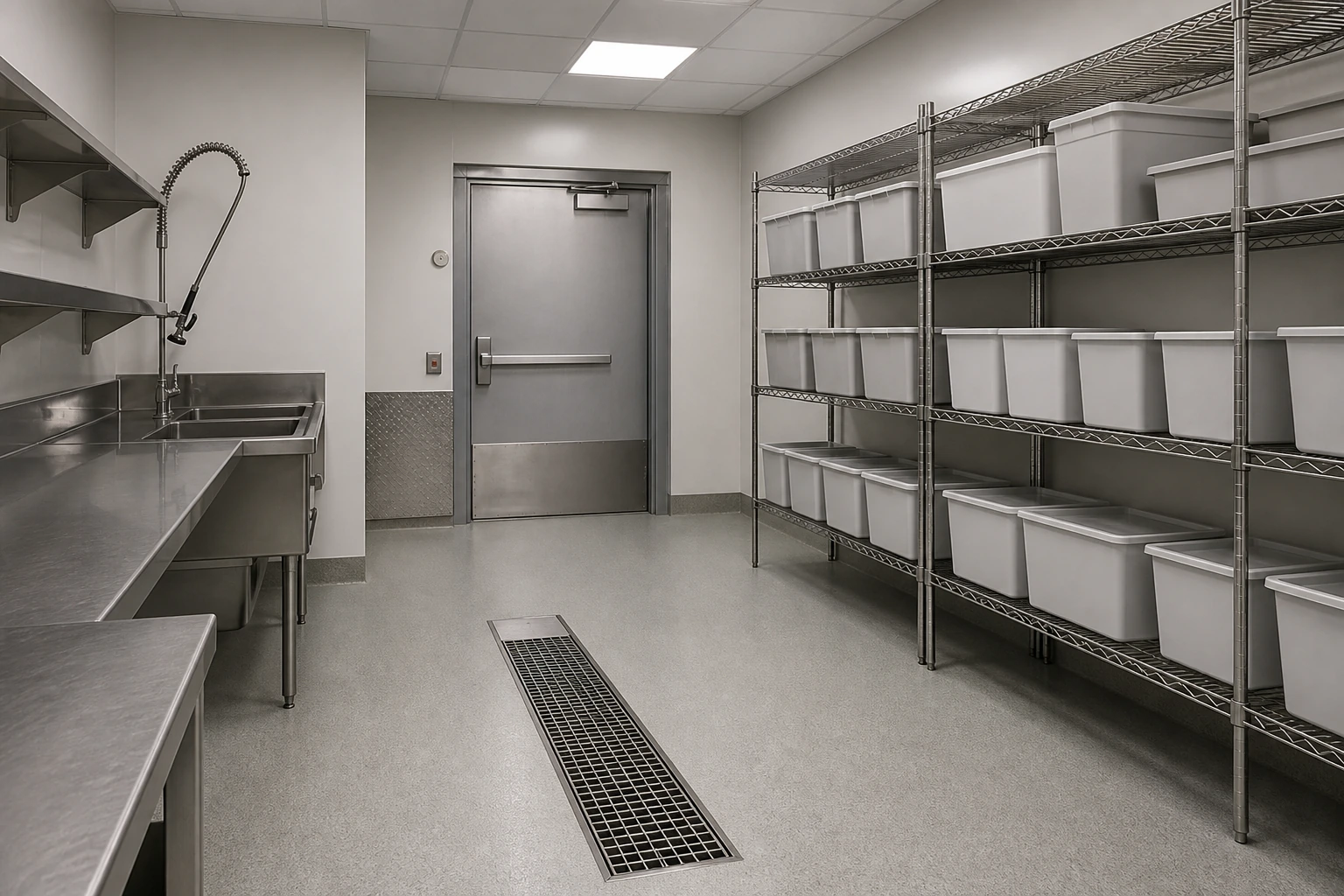
Drains, dry storage, and delivery areas are where most kitchen pest problems begin — and where inspectors look first.
The pests that fail a kitchen inspection
A handful of pests account for the vast majority of food-service violations in Southern California:
- Cockroaches. The number-one red flag. German cockroaches breed rapidly in warm kitchens, hide in equipment and cracks, and are an automatic violation when found in food-prep areas.
- Flies. House flies and small drain flies signal sanitation issues around waste, drains, and standing water — and they land directly on food-contact surfaces.
- Rodents. Droppings, gnaw marks, or grease trails along walls are serious findings that point to entry gaps and unprotected storage.
- Ants. Argentine ant trails to sweet or greasy residues are common in SoCal kitchens and undermine the appearance of a clean operation.
- Stored-product pests. Beetles and moths in flour, grain, and dry goods can quietly contaminate inventory between deliveries.
What health inspectors actually look for
Inspectors aren’t only counting live pests — they’re looking for the conditions that invite them and the records that prove you’re managing the risk. In practice, that means:
- Live pests or droppings in prep or storage areas
- Gaps around doors, pipes, and vents
- No pest-control service records on site
- Standing water, unsealed dry goods, overflowing waste
- No live activity, no droppings, no evidence
- Sealed entry points and protected storage
- A current service log with dated visit notes
- Monitoring devices placed and documented
The difference between the two columns often isn’t cleanliness alone — it’s whether there’s a documented program creating the record and catching problems before the inspector does.
What a real food-service pest program includes
A program worth paying for protects your kitchen on four fronts:
- Scheduled, proactive service. Regular visits on a cadence that matches a food-service environment — often monthly or more — so problems are prevented, not chased.
- Inspection-ready documentation. Dated service notes, findings, treatments, and monitoring records kept on site, so you can hand an inspector a clean log on request.
- Integrated Pest Management (IPM). Exclusion, sanitation guidance, and targeted, food-safe treatment — not just spraying — to reduce risk without compromising your kitchen.
- Fast response. A real point of contact who shows up quickly when a sighting or a surprise inspection puts you on the clock.

An on-site service log is what turns a clean kitchen into a documented, inspection-ready one.
Why reactive treatment costs more
It’s tempting to treat pest control as a cost to minimize and only call when something shows up. In food service, that math almost always works against you. Reactive treatment means you’re paying for emergencies — usually after a sighting during service, a failed inspection, or a review that names the problem publicly. A preventative program spreads cost predictably, keeps your documentation audit-ready year-round, and protects the two things that are far more expensive to lose: your health-code standing and your reputation.
How AG Pest Control works with restaurants and food-service businesses
AG Pest Control is a family-owned, Southern California company that has protected residential and commercial properties across San Diego, Orange County, and Riverside for over 40 years. For restaurants, commercial kitchens, and food-service operations, our approach is built around the realities above:
- We document every visit with dated notes and findings you can keep on site for inspectors.
- We use IPM methods — exclusion, monitoring, and food-safe, targeted treatment appropriate to a kitchen.
- We respond fast when a sighting or a surprise inspection puts you on the clock.
- We work around your service hours to avoid disrupting prep and dining.
- We earn the renewal with results — not lock-in contracts and cancellation traps.
Whether you run one location or manage several, the same principles apply — and they pair naturally with our programs for property managers and multi-unit properties. For authoritative background on cockroach biology and control, the UC Statewide IPM Program’s Cockroaches Pest Notes is the leading California reference.
Keep your kitchen inspection-ready
Whether it’s one restaurant or a group of locations across SoCal, we’ll walk through a scheduled, documented food-service program built around your operation — no pressure, no lock-in.
Request a Commercial QuoteFrequently asked questions about restaurant & commercial kitchen pest control
Let’s protect your kitchen — the right way
AG Pest Control serves San Diego, Orange County, and Riverside with documented, no-lock-in commercial and food-service pest programs built for health-code compliance.
Get a Free Quote