Holiday Pests in Southern California: The Uninvited Guests Hiding in Decorations, Firewood, and Your Pantry
The holidays bring boxes out of the garage, a fresh tree into the living room, firewood next to the fireplace, and a lot more flour into the pantry. Most of what comes along for the ride is harmless, a few things are worth a closer look, and almost all of it is easier to handle before it’s inside. Here’s how to spot the usual suspects and a simple routine for keeping them out.
Where holiday pests come from
Pests don’t arrive on a schedule that matches your decorating plans, but your decorating changes where they can hide. Boxes that sat untouched for eleven months, logs that spent the year outdoors, a tree that grew in a field, and pantry items bought in bulk for baking all create new routes indoors. Southern California’s mild winters also mean many insects and rodents stay active when much of the country has gone quiet.
If you’re also seeing ants around the kitchen after rain, our guide to fall pest control in Southern California covers the broader seasonal picture.
The holiday pest calendar
Activity varies by where you live, but this is the general rhythm for Southern California homes during the holiday season.
| Item | Nov | Dec | Jan |
|---|---|---|---|
| Rodents in storage areas | Peak | Peak | Active |
| Pantry moths and beetles | Active | Peak | Active |
| Spiders in trees and firewood | Active | Active | Low |
| Ants indoors after rain | Active | Active | Peak |
Stored decorations: what to check first
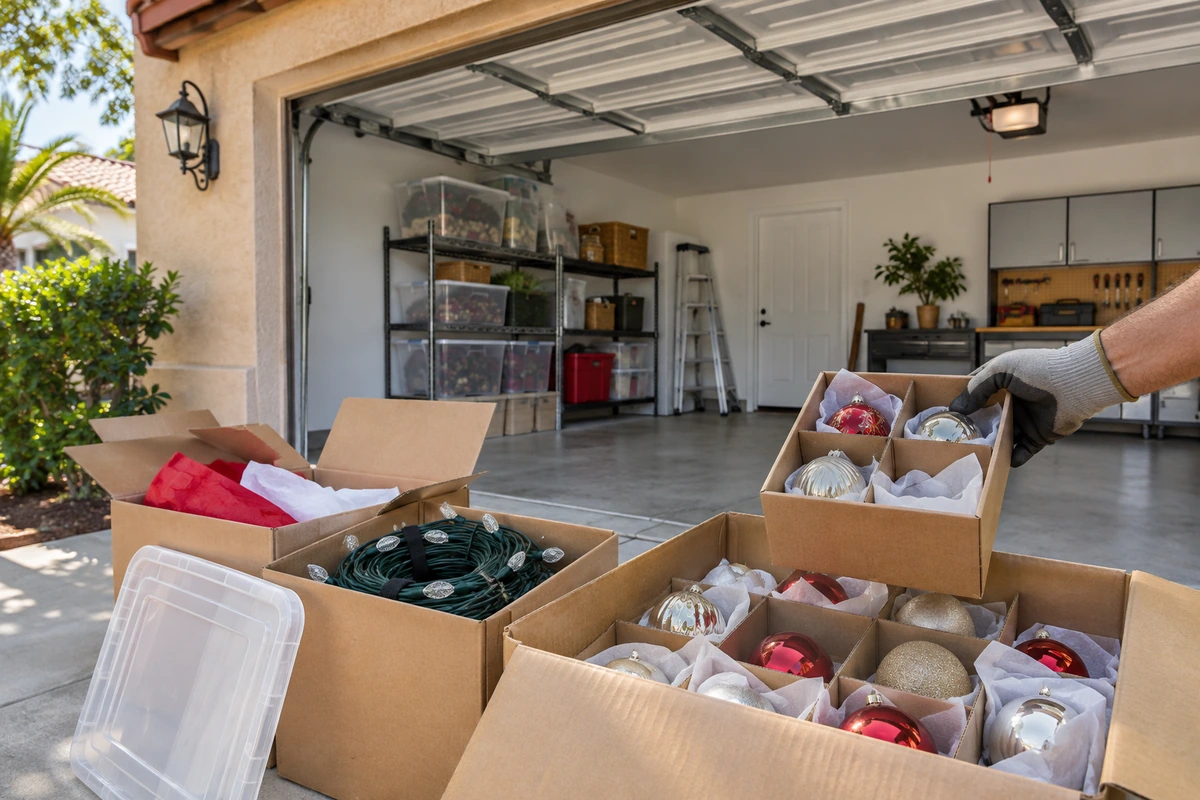
Boxes in garages, attics, and storage units are the most common source of holiday surprises. Rodents look for sheltered, quiet places to nest, and a stack of cardboard with wrapping paper and tissue inside is hard to beat.
-
Droppings or urine stains. Small, dark, rice-sized droppings suggest mice. Larger, capsule-shaped ones suggest rats.
-
Shredded paper or fabric. Nesting material tucked into ornament boxes or the folds of a tree skirt is a clear sign.
-
Gnawed corners or chewed lights. Wiring that has been chewed should be replaced, not reused.
-
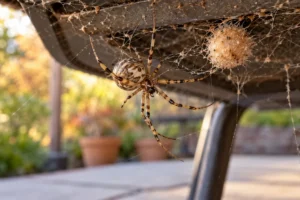
Webbing and egg sacs. Spiders favor undisturbed corners. A quick shake outdoors usually handles them.
Firewood and live trees
Firewood and live trees spend months outdoors, and the warmth of a home wakes up anything that was overwintering in them. Most hitchhikers are minor: spiders, small beetles, aphids, and the occasional egg case. A few habits keep them from becoming a nuisance.
Firewood · nuisance
Trees and log piles
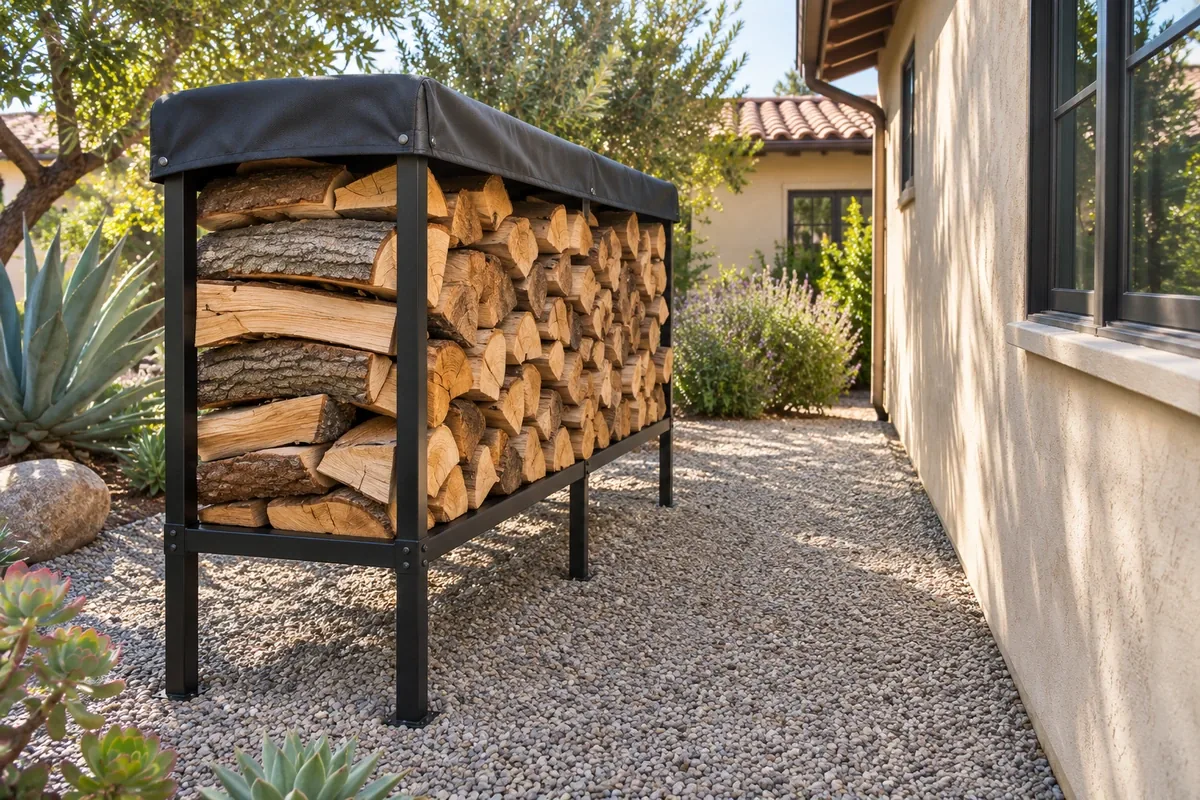
The more important point is where the firewood lives. Wood stacked against the house gives termites and rodents a bridge to your walls, so keep it off the ground, a few feet from the structure, and bring in only a day or two of supply.
Holiday baking and the pantry
Bulk flour, nuts, dried fruit, and spices are the staples of holiday baking, and they’re also what pantry pests like Indianmeal moths and grain beetles eat. Pantry pests usually come in with packaged food, not from outside, and show up as small moths flying in the kitchen or webbing and larvae in sealed-looking packages.
Open bags rolled shut with a clip; old flour kept at the back of the shelf; bulk goods in original paper packaging; spills left in shelf corners.
Airtight glass or hard-plastic containers; first in, first out rotation; check dates and look before baking; wipe shelves before restocking.

The unpack-and-inspect routine
This takes about ten minutes and covers nearly everything above.
-
Unpack outside. Open decoration boxes in the garage or on the patio, not on the living room rug.
-
Inspect and shake. Look for droppings and nesting material. Shake the tree and any wreaths or garlands outdoors.
-
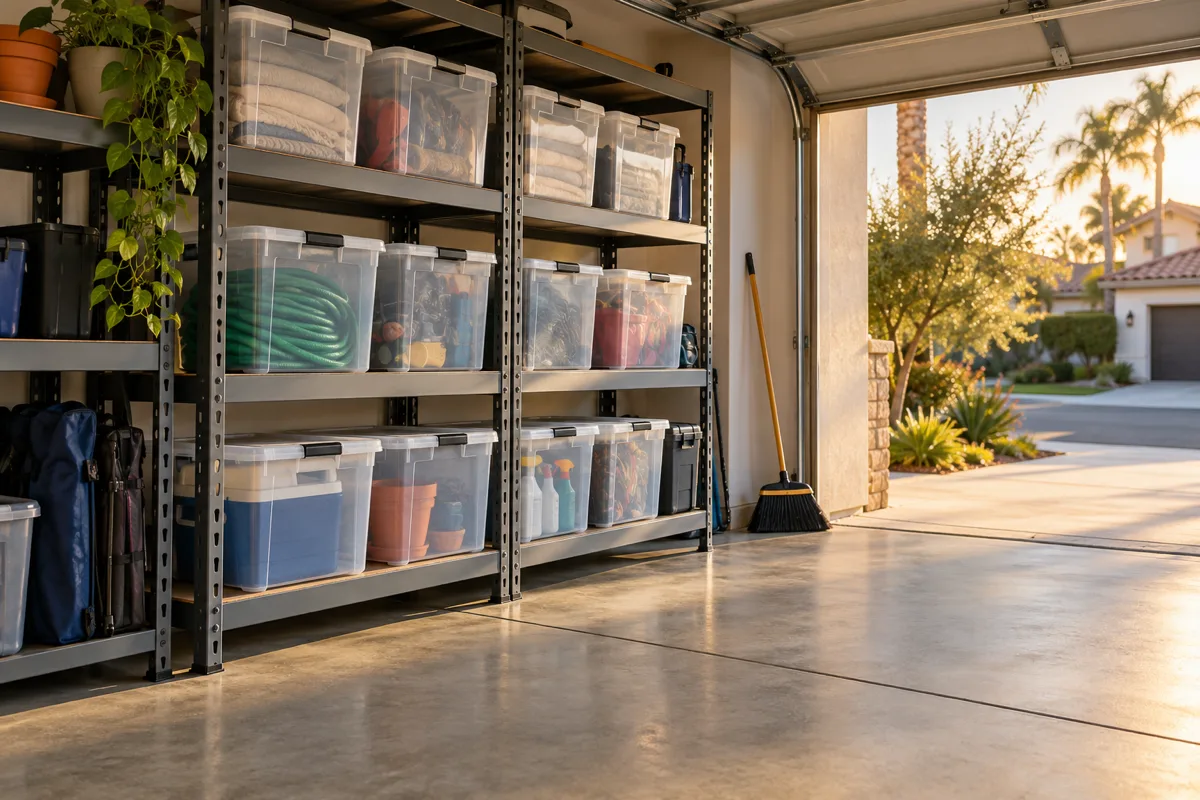
Switch to lidded plastic bins for storage. When the season ends, repack into sealed plastic bins and keep them off the floor.
-
Stage the firewood. A small covered basket indoors, the rest outside on a rack.
-
Seal the pantry. Move staples to airtight containers and discard anything that looks infested.
County by county: what we see most
When to call a professional
Most holiday hitchhikers are an unpack-and-inspect problem. Call a licensed professional if you find recent droppings or gnaw marks, hear activity in walls or attic, see repeated moth or beetle problems after clearing the pantry, or notice mud tubes or wood debris around the home. For kitchen sanitation guidance, the UC Statewide IPM Program’s Cockroaches Pest Notes is a good California reference. We cover the winter rodent side for commercial properties in our property manager’s checklist, and the rain-driven pests in our Orange County moisture-pest guide.
Found something in the decorations?
We’ll take a look, tell you honestly what we find, and explain your options. No pressure. Serving San Diego · Orange County · Riverside