Winter Rain and Moisture Pests in Orange County: Subterranean Termites, Earwigs, Silverfish, and More

Rainwater pouring from a short downspout onto soaked mulch against the stucco foundation of an Orange County home after a winter storm

Table of Contents

Moisture Pest Guide · Orange County

Winter Rain and Moisture Pests in Orange County: Subterranean Termites, Earwigs, Silverfish, and More

By the AG Pest Team · November 25, 2026 · 7 min read · Orange County

Fall rain sends ants indoors. Winter rain does something different: it soaks soil, mulch, and wood, and a new group of pests moves in around the moisture.

Quick answer

After winter rain in Orange County, the pests you are most likely to see are subterranean termites, earwigs, silverfish, and pill bugs or sowbugs. Nearly all of them are tied to water the property is holding, so fixing drainage, irrigation, and mulch is as important as treating the pest.

  • Subterranean termites are the only structural risk in this group. They swarm on warm, sunny days after fall or spring rains and build mud tubes from the soil up to wood (UC IPM).
  • Earwigs and pill bugs are nuisance pests. Large numbers near a door usually mean wet mulch or overwatered plantings against the house.
  • Silverfish point to humidity indoors, most often in bathrooms, laundry rooms, and closets.
  • Short downspouts, sprinkler overspray, and mulch piled against stucco are the most common moisture sources we find.
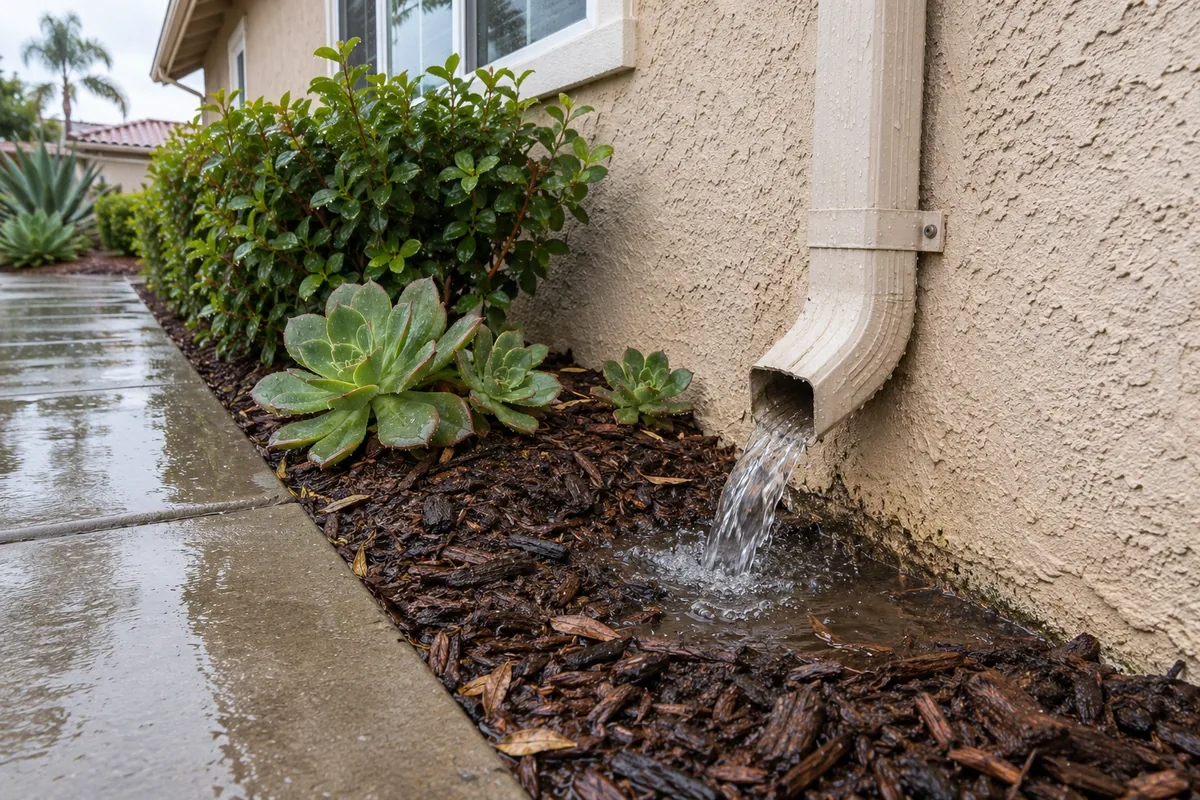
Rainwater pouring from a short downspout onto soaked mulch against the stucco foundation of an Orange County home after a winter storm
A short downspout and mulch piled against the wall keep soil wet for days after a storm, which is exactly what moisture pests look for.

Why you see more bugs after rain in Orange County

Moisture-loving pests need damp conditions to survive. After a storm, soil next to foundations stays wet for days, mulch holds water, gutters overflow, and crawlspaces and bathrooms stay humid. Those pockets become habitat. The pests are more visible when the weather turns because they’re moving toward or away from the water.

If ants were your problem after the first rain of the season, our guide to ants after the first rain in Southern California covers that side, and how California rainfall affects pests explains the bigger seasonal pattern.

AG Pest tip: If you only treat the pest and leave the moisture, the same pest comes back. Treatment and moisture correction work together.

Which pests show up after winter rain
Western subterranean termite
Reticulitermes hesperus
Lives in the soil and builds earthen shelter tubes up foundation walls to reach wood. Swarms emerge on warm, sunny days following fall or spring rains (UC IPM). Unlike drywood termites, they depend on moist soil.
Structural risk
European earwig
Forficula auricularia
Reddish brown, about 3/4 inch long, with pincers at the tail. Feeds at night and hides by day in dark, cool, moist places such as mulch and weeds (UC IPM). Mostly a nuisance, although earwigs can nibble seedlings and soft plants.
Nuisance · moisture indicator
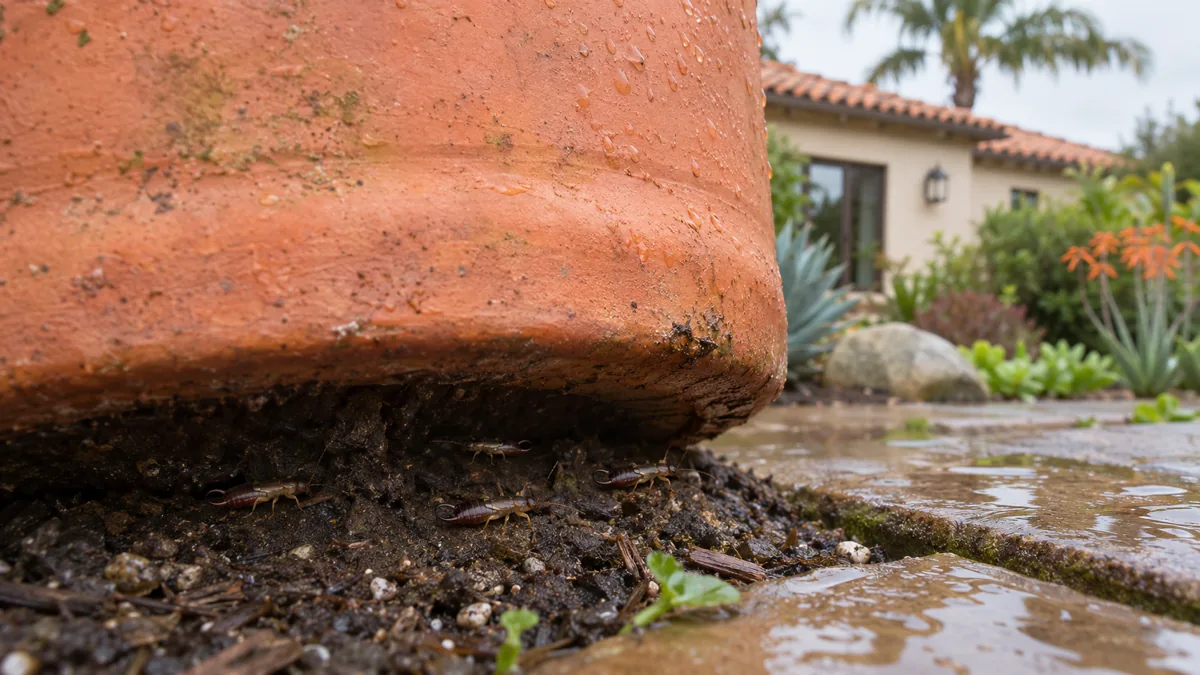
European earwigs on damp soil under a lifted terracotta flower pot on a wet patio at an Orange County home after winter rain
European earwigs hide by day in cool, damp spots like the underside of pots. Finding them there after rain points to wet soil or mulch nearby.
Silverfish
Lepisma saccharina
Shiny, silver or pearl gray, and about 1/2 inch long. Comes out at night and feeds on dry, starchy materials such as paper with glue or paste, book bindings, cereals, and flour. Silverfish need a lot of moisture (UC IPM).
Nuisance · indoor humidity
Pill bugs and sowbugs
Armadillidium vulgare and Porcellio spp.
Gray, oval crustaceans (not insects) that feed mostly on decaying plant material. They sometimes wander indoors, and large numbers suggest wet soil or mulch against the structure (UC IPM).
Nuisance · wet soil indicator
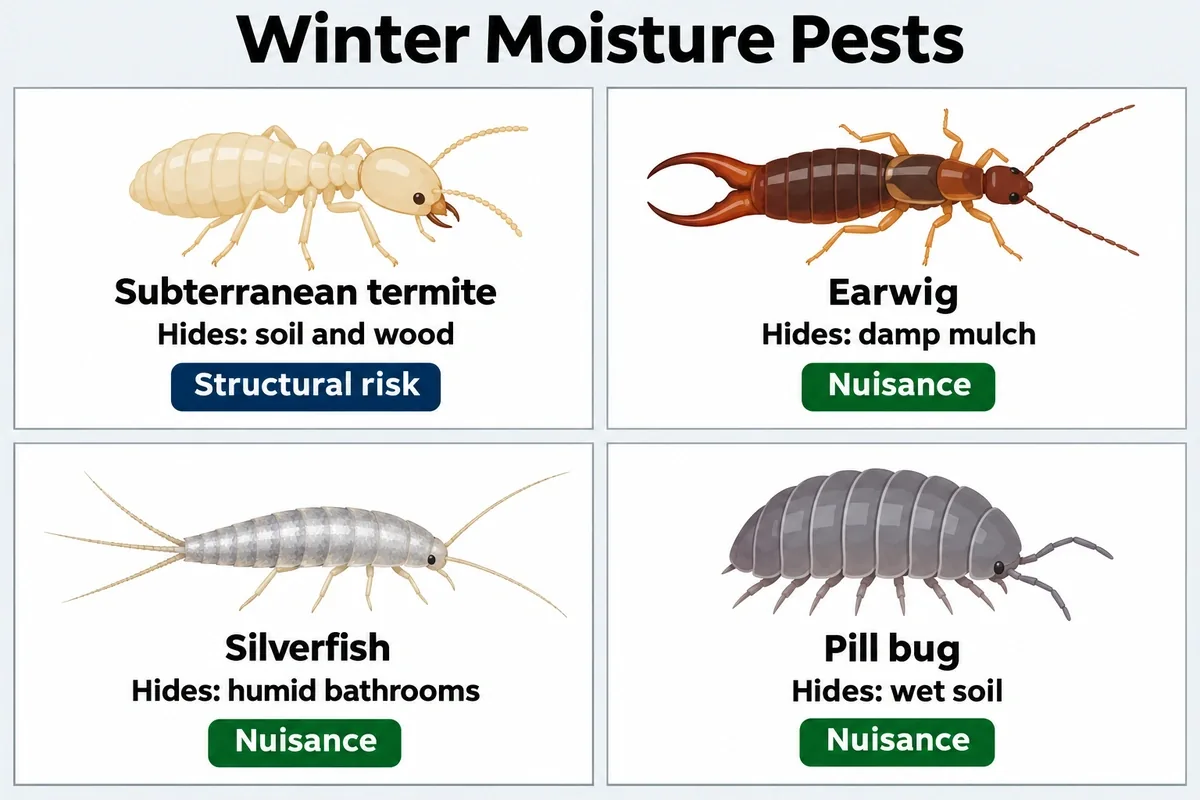
Infographic comparing four winter moisture pests in Orange County: subterranean termites in soil and wood, earwigs in damp mulch, silverfish in humid bathrooms, and pill bugs in wet soil
Four pests that follow winter rain, where each one hides, and which one is a structural risk.

Signs of moisture pests around your home

  • 1
    Mud tubes. Narrow tunnels of soil on foundations, piers, or the underside of floors. These point to subterranean termites. Our guide to signs of termite damage shows what to look for.
  • 2
    Discarded wings. Small piles of equal-length wings near windows or doors, often after rain.
  • 3
    Soft or hollow-sounding wood. Check baseboards, door frames, and subarea access points.
  • 4
    Earwigs or pill bugs at the door. Often follows wet mulch or overwatered plantings near the threshold.
  • 5
    Silverfish in bathrooms and closets. Feeding damage looks like irregular notches or scraped areas on paper and cardboard.

How to fix the moisture that attracts pests

Most of these fixes are simple maintenance, and they are the difference between a one-time treatment and a recurring problem.

  1. Gutters and downspouts. Clear them and extend discharge several feet from the foundation.
  2. Irrigation. Fix leaks and keep sprinkler overspray off stucco and wood trim. UC IPM also suggests keeping irrigation water back from foundations, especially near entryways (UC IPM).
  3. Mulch. Pull it back several inches from the walls and keep it thin.
  4. Wood-to-soil contact. Lift fence posts, trellises, and trim off the soil, or use treated materials.
  5. Vents and crawlspaces. Keep vents clear and fix plumbing leaks promptly. UC IPM lists repairing plumbing leaks and faulty grades among the first steps against subterranean termites (UC IPM).
  6. Bathrooms and closets. Run exhaust fans and use a dehumidifier in storage rooms.
  7. Door sweeps. Weather stripping and door sweeps help keep pill bugs and earwigs from walking in.

Fix it yourself or call for an inspection?

Fix with maintenance
Wet mulch, pill bugs, and earwigs by the door. Silverfish in humid closets. Overflowing gutters and irrigation leaks. Clutter and cardboard storage.
Call for an inspection
Mud tubes on foundation walls. Swarmers or wings indoors. Soft or damaged wood. Pests that keep returning after moisture fixes.

Seeing termites swarm doesn’t always mean the house is infested, and UC IPM notes that a professional inspection is usually needed to confirm it (UC IPM). Our complete guide to termite inspection walks through what happens during the visit. If termites are confirmed, see termite treatment options for Orange County homes and our tenting vs. local treatment comparison.

Moisture pests across Orange County

Coastal Orange County
Marine moisture and older wood
From Seal Beach to San Clemente, marine moisture and older construction can keep wood and soil damp, so drainage and ventilation matter most.
Central Orange County
Shared walls and landscaping
In condos and townhomes around Irvine, Santa Ana, and Anaheim, one unit’s moisture problem can affect the neighbors.
South Orange County
Slopes, planters, and irrigation
In hillside communities like Mission Viejo and Laguna Niguel, planters, slopes, and irrigation placed against buildings are common moisture sources.

For termite help anywhere in the county, see termite control in Orange County. For general pests, see Orange County pest control, and for rodents moving in during the same season, our Orange County rodent control page. If you’re sorting out drywood versus subterranean termites, start with our drywood termite swarm season guide.

Seeing mud tubes or swarmers?

We’ll inspect the foundation, subarea, and exterior, show you the evidence, and explain your options. No pressure.

Request a Termite Inspection
Serving San Diego · Orange County · Riverside · Call (800) 696-8565

Frequently asked questions about winter moisture pests in Orange County

Why do I see more bugs after it rains in Orange County?⌄
Rain soaks soil, mulch, and wood, and moisture-loving pests such as earwigs, pill bugs, silverfish, and subterranean termites move toward or away from the damp areas. That makes them more visible around thresholds, patios, and bathrooms in the days after a storm.
How do I tell subterranean termites from drywood termites?⌄
Subterranean termites live in the soil and build pencil-width mud tubes up foundations to reach wood. Drywood termites live entirely inside dry wood and leave small, six-sided pellets. An inspection by a licensed company confirms which one you have.
Do earwigs and pill bugs damage my home?⌄
Generally no. They are nuisance pests that point to moisture. Earwigs can feed on seedlings and soft plants, and pill bugs feed mostly on decaying plant material, but neither damages the structure.
What attracts silverfish?⌄
Moisture and starchy materials such as paper, glue, cardboard, and dry foods. UC IPM notes that silverfish need a lot of moisture, so bathrooms, laundry rooms, closets, and storage areas are typical spots, and dehumidifiers and fans help discourage them.
What is the fastest moisture fix for pests around my house?⌄
Extend downspouts away from the foundation, repair irrigation leaks, pull mulch back from the walls, and clear gutters. These steps address the most common moisture sources around Orange County homes.
When should I call a professional?⌄
Call if you find mud tubes, swarmers or wings indoors, soft or damaged wood, or pests that keep returning after you fix moisture issues. A thorough inspection will show what is active and what is not.

Pest and termite control across Orange County

Inspections, moisture recommendations, and treatment plans explained in plain language, documented every visit.

Request Service

Questions? Call (800) 696-8565. We’re happy to walk you through your options.

AG
AG Pest Team
State Certified Pesticide Applicators · Southern California

This article was written and reviewed by the AG Pest Team serving San Diego, Orange County, and Riverside County. Since 1982, AG Pest has provided residential and commercial pest management across Southern California, with divisions specializing in general pests, rodents, termites, birds, and plant health care. Our technicians are State Certified Pesticide Applicators. Recommendations reflect integrated pest management (IPM) practices for Southern California.

State Certified Pesticide Applicators Since 1982 IPM Approach

Leave a Reply

Your email address will not be published. Required fields are marked *

More From the blog

Call Now Button