Winter Rodent Prevention for Commercial Properties in Southern California: A Property Manager’s Checklist
Cooler nights and the first winter rains send rodents looking for warmth, food, and shelter, and commercial buildings offer all three. For a restaurant, warehouse, retail center, office, or HOA, a single sighting can mean a failed inspection, a tenant complaint, or a spoiled shipment.
The best way to prevent rodents on a commercial property in winter is to seal entry points before the rain, remove food and cover around the building, and walk the property on a schedule with dated notes and photos. Trapping handles the rodents already inside. Exclusion keeps the next ones out.
- Rats can squeeze under a door with a 1/2-inch gap, and mice under a 1/4-inch gap, so door sweeps and pipe penetrations come first (UC IPM).
- Roof rats, the common climber in Southern California, enter from rooflines, vents, and tree limbs, so look up as well as down.
- Dumpsters, loading docks, and dense landscaping against walls are the biggest outdoor draws.
- Dated photos and service notes are what health inspectors, insurers, auditors, and HOA boards ask to see.
- Why rodents move into commercial buildings in winter
- Which rodents target Southern California businesses
- Where rats and mice get into commercial buildings
- The 15-minute rodent walk-through
- What to prioritize by property type
- Trapping vs. exclusion: reactive vs. proactive
- Rodent control records that hold up
- County by county: what we see most
- Frequently asked questions
Why rodents move into commercial buildings in winter
Roof rats and house mice are active year-round in Southern California, but cooler nights and wet weather increase the pressure on buildings. Outdoor food and cover become less reliable, and a warm, dry structure with food waste, packaging, and quiet corners becomes more appealing. UC IPM notes that house mice frequently move into buildings in autumn as nighttime temperatures drop (UC IPM).
Commercial properties add extra draws that homes don’t have: dumpsters, loading areas, daily deliveries, and long quiet stretches after hours. A food source behind one building can support rodents that live under the next one.
Which rodents target Southern California businesses
Knowing which rodent you have tells you where to look for the way in.
Enters from above · rooflines, vents, utility lines
Enters at ground level · foundations, doors, drains
Fits through 1/4-inch gaps
For a deeper look at the species and how we handle them, see our guide to rodent control in Southern California.
Where rats and mice get into commercial buildings
-
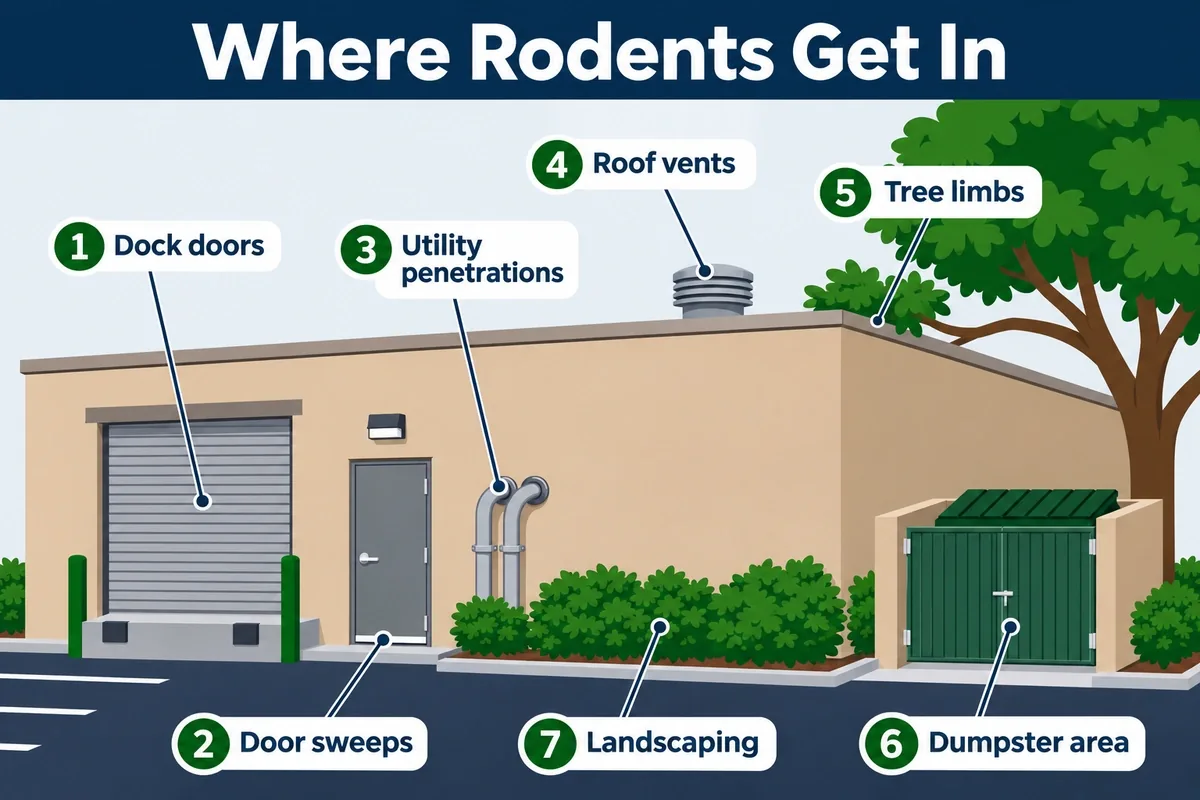
Doors and docks. Worn sweeps, gaps at door corners, and roll-up doors left open during loading.
-
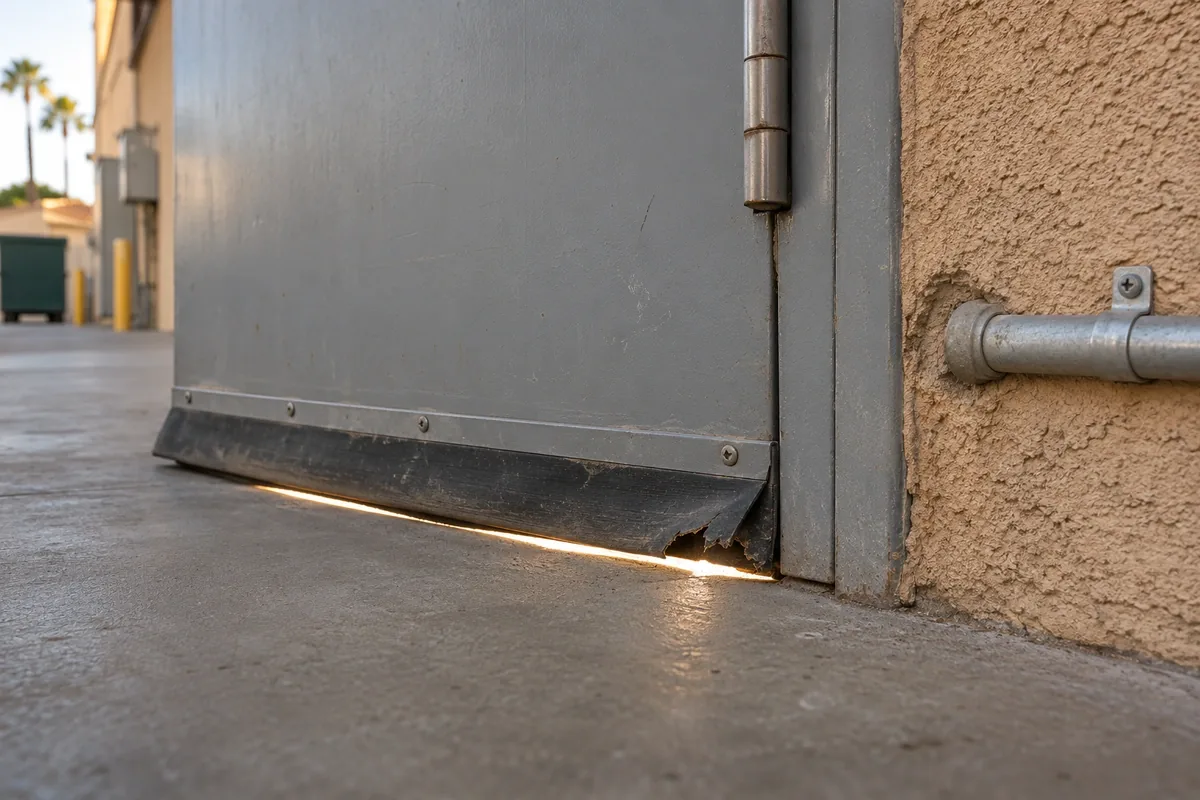
Utility penetrations. Gaps around pipes, conduit, AC line sets, and cable entries. UC IPM recommends sealing them with materials rodents can’t chew, such as steel wool, wire screen, or sheet metal, since rats chew through plastic, foam, wood, and caulk.
-
Rooflines and vents. Tree limbs, parapets, and damaged vent screens give roof rats a path from above.
-
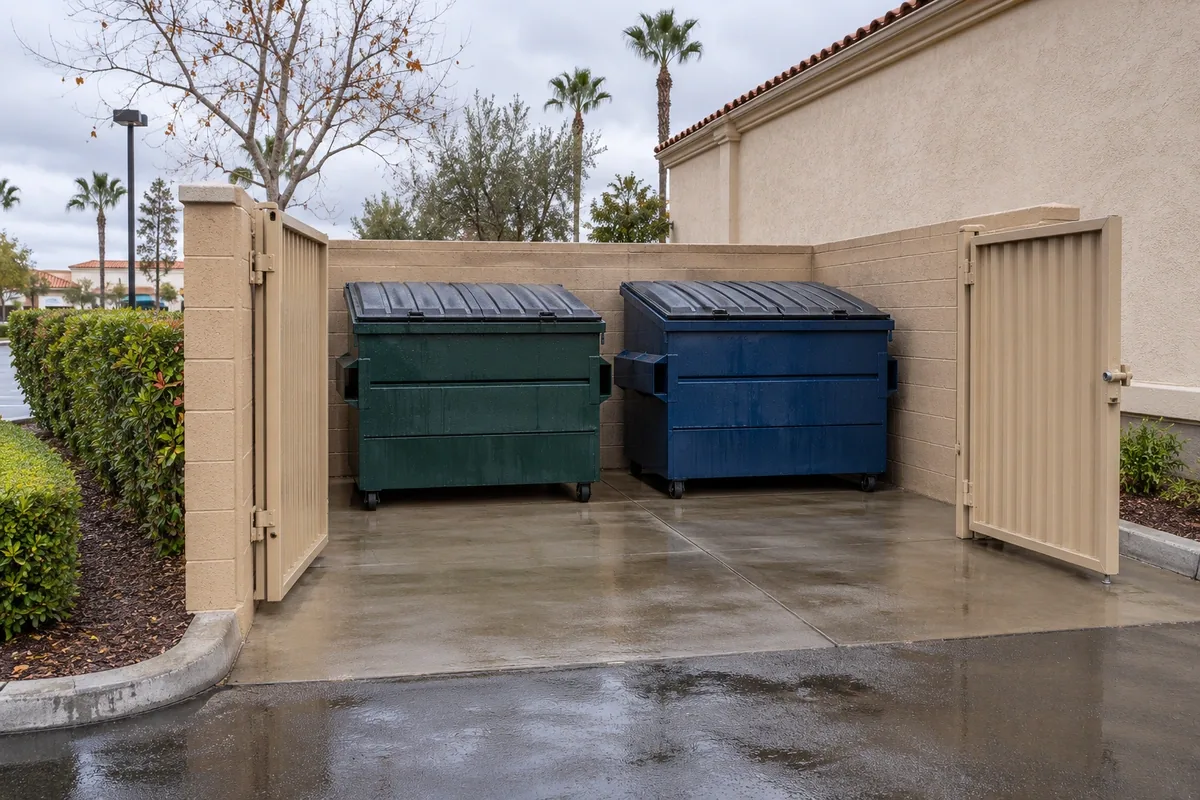
Dumpsters and trash rooms. Overfilled bins, open lids, and spills draw rodents close to the building.
-
Landscaping. Dense ground cover, palm skirts, and shrubs against walls provide cover and nesting.
The 15-minute rodent walk-through
You don’t need special equipment, just a flashlight, a phone camera, and a habit. Walk the same route each time so changes stand out.
- Start at the doors. Check sweeps, thresholds, and door frames. Look for daylight under closed doors.
- Check penetrations. Look at every place a pipe, wire, or duct enters the building.
- Walk the dumpster area. Lids closed, pad clean, and the container placed away from doors where the site allows.
- Look up. Trim branches away from the roofline and check vent screens and roof penetrations.
- Scan for evidence. Droppings, gnaw marks, grease rub marks along walls and beams, and tracks in dust.
- Photograph everything. Dated photos create a baseline you can compare after each storm.
What to prioritize by property type
Trapping vs. exclusion: reactive vs. proactive rodent control
Wait for a sighting or a complaint. Set traps and hope. No written record of conditions. Repeat the cycle every winter.
Seasonal walk-through before the rain. Seal and screen entry points. Dated notes and photos every visit. Adjust the plan from trends.
UC IPM describes exclusion, or “building them out,” as the most successful and longest-lasting strategy for rat control around structures (UC IPM). Trapping still matters for rodents already inside, but it works best as part of a plan that closes the way in.
Rodent control records that hold up
Health inspectors, insurers, franchise auditors, and HOA boards all want the same thing: proof that someone is paying attention. The most useful records are simple:
- Date-stamped service notes for every visit.
- Photos of activity and of each fix.
- A short list of recommendations, with an owner for each one.
- A single person who answers the phone.
If a vendor can’t produce last quarter’s records quickly, that’s useful information.
County by county: what we see most
Want a second set of eyes on your property?
We’ll walk it with you, document what we find, and explain your options. No pressure.
Request a Commercial Inspection
Frequently asked questions about commercial rodent prevention
Commercial rodent control across Southern California
Inspection, exclusion, and documented service for restaurants, warehouses, retail centers, offices, and HOAs.